Get Full Government Meeting Transcripts, Videos, & Alerts Forever!
Get email alerts on the Railroad Ceiling Assessment topic
No spam. Unsubscribe anytime.
Railroad counsel urges Syracuse reclassification under state "railroad ceiling," board and staff agree to follow up on parcel splits and income data
Summary
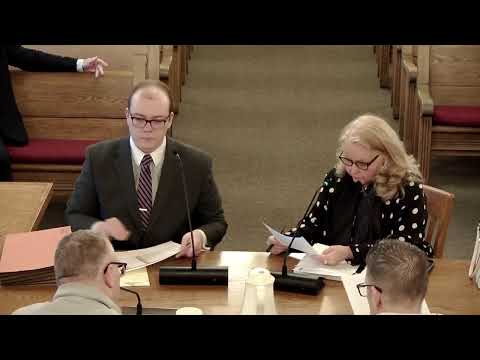
Counsel for New York Susquehanna and Western Railroad told the Syracuse Board of Assessment Review on Feb. 26 that the city’s assessments for railroad property should be capped by the state-imposed railroad ceiling and that some special charges appear to have been applied in ways that bypass that ceiling.
Counsel for New York Susquehanna and Western Railroad told the Syracuse Board of Assessment Review on Feb. 26 that the city’s assessments for railroad property should be capped by the state-imposed railroad ceiling and that some special charges appear to have been applied in ways that bypass that ceiling.
Nolan Kokoris, an attorney with Bon, Schenick, and King representing the railroad, said the state’s Office of Real Property Tax Services issues a ceiling that limits the aggregate assessed value of railroad property in a taxing jurisdiction. "I would just reiterate that, the railroad ceiling is the upper limit on assessed valuations," Kokoris told the board during his closing remarks.
Kokoris said the final 2024 ceiling had been issued at roughly $4,100,000 and the 2025 ceiling at about $4,400,000, and that the railroad’s position is the city must ensure aggregate assessments do not exceed those ceilings. He also said the railroad believes actual market value for the properties is substantially below the ceiling based on income analysis for the railroad system and apportioned to Syracuse by track mileage; he offered to provide updated income information for the board’s review.
City staff acknowledged the ceiling and described the way the city applied reductions: staff said the assessor used a proportional exemption (allocation) to bring aggregate assessed values into compliance with the ceiling for ad valorem taxes, but Kokoris argued that approach did not reduce special-district charges that are assessed differently and in some instances appear to remain at higher values.
Several downtown parcels that include both track and billboard improvements were discussed at length. City staff and railroad counsel agreed to separate billboard improvements into distinct tax parcels where appropriate (commonly listed with a "slash 1" in the assessor’s system). Counsel said the city has already separated some billboards but that 8–10 remain consolidated on track parcels in the assessor’s records, which complicates valuation and grievance handling. At the hearing the petitioner withdrew grievances for four billboard parcel instances (addresses read by the board at the hearing), noting those are now or soon will be separately identified and therefore handled differently.
Why it matters: If the city’s aggregate railroad assessment exceeds the state ceiling, state law requires the assessor to reduce or exempt the excess. How those adjustments are implemented — by proportional exemption, reclassification or parcel-level revaluation — affects whether special charges and district levies are also reduced.
Next steps: Kokoris agreed to provide updated income information for the railroad’s properties by the end of the following week to aid the board’s determination. City staff agreed to verify parcel classification and to create separate parcel IDs for billboards where warranted so valuation and billing can be clarified. The board and parties noted notices would be sent in April and that some parcels remain in related Article 7 litigation.
Ending: No formal decision was made at the hearing. Both sides agreed to exchange documentation: the railroad will supply income data; the assessor’s office will continue parcel-classification work and provide clarifying information on special charges and whether those charges are ad valorem or separate fees.