Get Full Government Meeting Transcripts, Videos, & Alerts Forever!
Get email alerts on the Property Tax Assessment topic
No spam. Unsubscribe anytime.
Lawyers ask Syracuse board to cut assessments on 23 Destiny USA parcels, citing restricted parking use and contamination
Summary
Petitioners representing properties adjacent to Destiny USA asked the Syracuse Board of Assessment Review to lower tentative assessments on 23 parcels, saying 12 are parking lots attendant to the mall and 11 are vacant or billboard lots with environmental constraints.
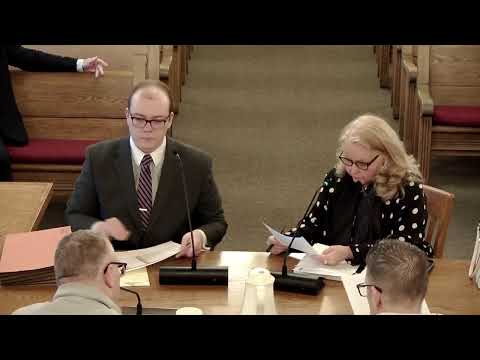
Petitioners representing properties adjacent to the Destiny USA shopping center asked the Syracuse Board of Assessment Review on Feb. 26 to reduce tentative assessments on 23 parcels, saying most are either parking lots that serve only as overflow for the mall or vacant parcels with environmental cleanup obligations.
Jacob Sonner, an attorney with Phillips Lytle LLP, who appeared for the petitioners, told the board “there’s 23 total” parcels covered by the filings. He said the group can be divided into 12 parking parcels and 11 vacant parcels, and asked the board to consider the classifications and income evidence submitted with RP-524 grievances.
The petitioners’ materials list each parcel’s current tentative assessed value and the petitioner’s proposed fair market value. Examples read into the record included 450 Solar St., currently tentatively assessed at $392,000 with a petitioner valuation of $120,000 (proposed assessed value $69,000), and a parking parcel at 5601 Solar St., tentatively $2,100,000 with petitioner fair market value $455,700 (proposed assessed value $262,027). The petitioners said some lots host billboards and some are vacant.
Why it matters: petitioners argued the parking parcels are restricted in use because they are attendant to Destiny USA and function primarily as overflow parking, which, together with the mall’s reduced valuation this year, lowers the parcels’ market value. Petitioners also said many of the vacant parcels qualify for the State Department of Environmental Conservation (DEC) Brownfield Cleanup Program, which they said significantly affects redevelopability and therefore value.
Board members asked for more concrete data on current mall and parking usage. The board and petitioners agreed that a recent parking or foot-traffic survey would help establish current economic reality; Sonner said he would “ask the Destiny folks” and submit a supplement to the board if available. Ann Gallagher (staff member) said the city would welcome such data.
City staff and petitioners also identified a likely ownership-record discrepancy on two North Clinton Street parcels (parcel IDs referenced in the hearing as 901 and 931 on the petitioner’s list). Petitioners said those properties are listed under JPD Corp. on the roll but may have changed ownership; the petitioner agreed to follow up directly with the assessor’s office and the county to confirm correct ownership and submit corrected information if needed.
Procedural context and next steps: Sonner said many of the filings have related Article 7 tax cert litigation in state court; he relied on RP-524 forms and the affidavit of Aaron Brunner already in the board’s record. City staff said because several parcels are in litigation the city’s position for now is that the tentative assessments are correct, but staff acknowledged a recent large reduction in the mall’s valuation that could have a knock-on effect for attendant parking parcels. The petitioner agreed to supply any parking-use data it can obtain and to submit it in writing; the city said it will verify ownership records and, where appropriate, split billboards into separate parcel IDs. The board will issue formal notices in April.
Ending: No formal vote or decision was recorded at the hearing. Both sides agreed to follow up: the petitioners will provide any parking/foot-traffic or income evidence they can obtain, and the assessor’s office will verify ownership and parcel splits for billboard properties so the issues can be resolved or litigated as necessary.