Get Full Government Meeting Transcripts, Videos, & Alerts Forever!
Get email alerts on the School Safety And Mental Health topic
No spam. Unsubscribe anytime.
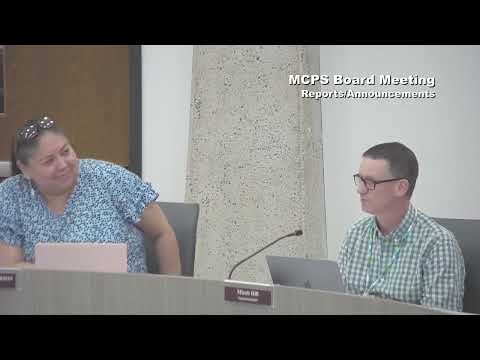
Missoula trustees hear work session on MCPS systems of support, mental‑health screening and building safety
Summary
Superintendent and district staff reviewed multi‑tiered systems of support, mental‑health screening pilots with Rural Behavioral Health Institute, partnerships for crisis response and new district safety practices including the Safer Montana tip line and I Love You Guys standard response training.
Missoula County Public Schools trustees received an information‑only work session on district systems of support, mental‑health screening and school safety measures, including new screening partnerships and districtwide safety practices.
Superintendent Hill introduced a district team that described a tiered multi‑tiered system of supports (MTSS) for whole‑child wellness, the district’s community partnerships and several new or expanded interventions. "These systems of support are essential components of a healthy and strong education system," said Assistant Superintendent Binney ("Benny") Jamona, who led the presentation.
Staff described tier 1 as universal, schoolwide supports; tier 2 as targeted small‑group interventions; and tier 3 as individualized supports, which may include special education or therapeutic services. Presenters said research benchmarks the distribution of students roughly as 70–80 percent tier 1, 15–20 percent tier 2 and 5–10 percent tier 3, and they noted COVID‑era increases in demand for tier 2 and 3 interventions.
District staff explained screening and clinical partnerships. The district is piloting a computerized mental‑health screener (combining elements of the Columbia suicide screener and depression/anxiety screening) with the Rural Behavioral Health Institute (RBHI). Staff said RBHI can provide same‑day online therapist assessments for students who screen with recent suicidality and that RBHI offers bridge care and case‑management supports to connect families to ongoing services, including assistance when community providers are unavailable.
"We can have students meet online with a therapist the same day," said Erica Zins (student services leadership), describing a pilot day in which 78 seventh graders were screened, eight students scored in the high‑risk ("red") range, and six received same‑day therapeutic contacts with summaries and safety plans sent to families.
Staff also described the district’s partnership with Providence’s youth crisis diversion program, which provides mobile therapeutic response and case management to avert ER visits and formal citations. Presenters cited a reported nearly 20 percent reduction in citations among participating students after the program expanded.
District safety and prevention steps discussed included implementing I Love You Guys standard response language to replace inconsistent lockdown terminology, training school staff districtwide, conducting building and facility audits, and expanding communications tools. The district rolled out a Safer Montana tip line to collect anonymous or named reports of concerning behavior; staff said roughly 40 reports have been processed during the school year and that the system routes reports to the relevant building and to district safety staff for triage.
Presenters described school‑based supports and community partners: Partnership Health Center (school‑based health services), Missoula Food Bank (in‑school pantries), Boys & Girls Club (after‑school programs), University of Montana partnerships, and a local "play specialists" program with Missoula Parks and Recreation to support Title I early literacy classrooms and after‑school care.
Trustees questioned staffing and equity across school levels, including which schools have on‑site social workers, the structure of CSCT (Children’s Special Services/Community Support Teams) and how state funding changes affected services. Staff said CSCT billing and staffing changes since COVID reduced the service window in some schools and that filling therapist positions remains difficult.
Trustees also asked how the district measures progress. Staff cited several data points used to assess system health: universal screening results, office discipline referral counts, threat assessments, crisis response counts, suicide‑screener volumes, and school climate survey results (student, staff and family surveys). Staff recommended tracking these indicators year to year to measure whether tier distributions and climate metrics improve.
On technology and facility safety, district staff said camera systems, controlled main entrances and routine audits are part of facility improvements but cautioned that technology alone is not a substitute for trained adults and consistent response plans. "What you're trying to do is train the adults, not the technology, to react in the manner that will reduce the greatest amount of harm," said one district leader.
The presentation was information only; no board action was taken.
Ending
Trustees thanked staff and acknowledged the breadth of services and community partnerships. Staff said they plan to continue piloting the mental‑health screener, expand training and report back to the board with progress metrics in future sessions.