Get Full Government Meeting Transcripts, Videos, & Alerts Forever!
Get email alerts on the Mtss Restructuring topic
No spam. Unsubscribe anytime.
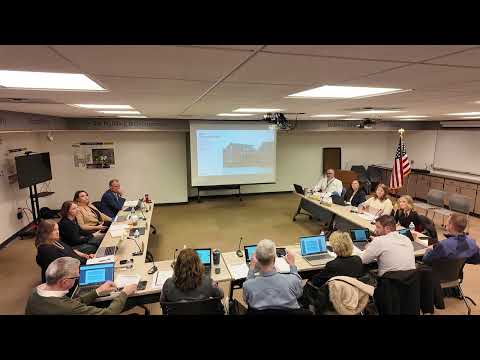
Board hears superintendent goals and a proposed MTSS reorganization to sustain supports after federal funds end
Summary
Hudsonville Public School District leaders presented a proposed reorganization of MTSS and student services designed to sustain tiered behavioral and instructional supports as temporary federal and grant funding ends.
Hudsonville Public School District leaders presented a package of superintendent goals and a proposed reorganization of Multi-Tiered System of Supports (MTSS) and student services intended to sustain behavioral and instructional supports after temporary federal and grant funding ends.
Superintendent Dr. Vanjiek (referred to in the meeting as the superintendent) and administrative staff said the goal of the reorganization is to preserve tier 1 classroom supports while reallocating positions and creating flexible, sustainable roles that can serve tier 2 and tier 3 needs across the district.
Why it matters: staff said many MTSS roles were originally created under time-limited grant language (for example, ESSER and similar recovery funds) that came with narrow job descriptions and eligibility rules. With those restrictions easing, administrators said they can redesign duties and redeploy staff to support a broader set of students and needs districtwide.
Key elements the administration described include: - Creating or renaming elementary-level MTSS positions as Student Support Specialists who will focus on tier 2 and tier 3 behavioral and instructional interventions and provide building-level leadership for paraprofessionals and family-facing work. - Adding district instructional coaches focused on elementary and secondary access so teachers can more readily obtain in-class coaching and professional development. - Creating a Student Services Facilitator to coordinate Section 504 processes, oversight of mental health therapists and district-level restorative-practices work; staff said the facilitator would provide consistency across elementary buildings. - Creating a Special Education Facilitator (secondary-facing) to attend and support IEP meetings, co-teaching practices and paraprofessional training; staff noted that this role requires a district representative who can fulfill legal IEP responsibilities. - Expanding or formalizing Alternative Learning Center (ALC)/in-school support at middle and high school levels and adding paraprofessional hours so ALCs can operate from start to end of school day.
Staff said the district faces a staffing trade-off: funding reductions could have eliminated a number of positions; instead administrators proposed a restructure that reduces some roles while adding other, more-flexible roles to preserve services. One staff speaker summarized the change as the district having to reallocate positions to maintain core services and avoid short-lived, two-year roles.
Quantitative details discussed in the meeting included the district’s current caseloads for Section 504 plans and IEPs; a staff member reported roughly 288 Section 504 plans and the district-wide total of about 1,100 Individualized Education Programs (IEPs). Administrators said principals, counselors and other staff currently absorb much of the coordination work for 504 and IEP processes and that the proposed facilitators would relieve building leaders and provide consistency.
Board members asked about job classifications, bargaining/contract implications, supervision lines and who would oversee new roles. The administration said instructional coaches would be associated with curriculum work while Student Support Specialists would report under student services; Kathy (MTSS coordinator) will remain in her role with a reporting relationship that aligns to student services.
Staff acknowledged the proposal will cause anxiety for affected employees and said the administration has met individually with many staff members. Administrators said they intend to manage the change through vacancy postings and internal bidding where applicable, and that several incumbents already hold required certifications for newly defined roles. Job descriptions were discussed and administration said formal descriptions will be provided to the board and staff as part of the process.
What did not happen: the meeting recorded a presentation and discussion of the proposed restructure; no formal board vote or final personnel actions were recorded in the transcript.
Next steps: administration will circulate job descriptions, proceed with required personnel processes and continue to brief the board as staffing changes are implemented. Administrators said they are trying to limit disruptions to classroom instruction while maintaining tier 2 and 3 supports.