Get Full Government Meeting Transcripts, Videos, & Alerts Forever!
Get email alerts on the Education topic
No spam. Unsubscribe anytime.
House education subcommittees advance literacy pilot, release‑time religious instruction and urge expanded vision and hearing screening
Summary
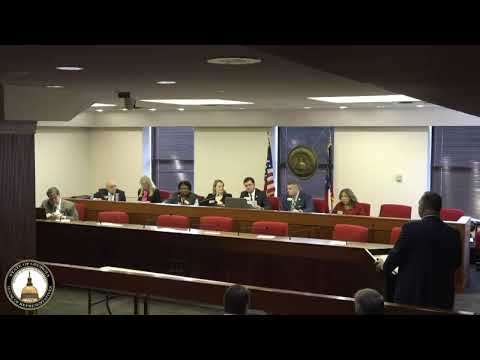
Members of two Georgia House education subcommittees advanced a three‑year immersive writing pilot, approved a release‑time religious instruction policy and adopted an urging resolution to expand vision and hearing screenings, forwarding each item to full committee.
Members of two Georgia House education subcommittees on separate agenda items advanced multiple measures on literacy, student health and school policy, sending each to full committee.
Representative Bazemore’s House Bill 200, a proposal to create a three‑year pilot immersive writing program for public elementary schools, drew the most sustained discussion. The subcommittee approved the bill on a voice vote and sent it to the full committee.
The bill would direct the State Board of Education to establish a pilot that provides grants for immersive writing programs serving students in grades 2 through 5, with an explicit alignment to state writing standards and an evaluation component. Representative Bazemore said the bill aims to give “all of our young people the opportunity to experience this program,” citing an example in which students write and publish books through a classroom program. Connie Crowley, identified as a retired Georgia teacher, literacy advocate and developer of the Share Your Story program, told the committee that immersive writing makes writing “fun and accessible” and reported that Share Your Story has published more than 200 student books in Georgia classrooms.
On funding, Bazemore told the committee the pilot would be subject to legislative appropriation. He initially referenced a larger figure when speaking off the bill text but read the bill language to the committee: “subject to appropriations by the General Assembly, the pilot program shall include funding for up to $2,000,000 in grants each school year for up to three years beginning with 2026–27.” The bill’s grant funding is optional for districts; schools must apply and be selected by the State Board of Education.
Representative Clark’s House Bill 133, which would require local education agencies to adopt policies excusing students for one hour per school week to attend off‑campus, privately funded religious instruction (so‑called release time), also advanced after extended debate. Clark described the proposal as voluntary and parent‑driven, saying it is “voluntarily run, parent sign‑up, privately funded” and that programs he referenced typically run about 45 minutes once a week. Several members asked about safeguards and the potential for school officials to vet providers. Representative Clark and other supporters said the law would preserve parental choice and that participating programs are privately funded and administered outside of class time; opponents and some questioners sought clearer administrative safeguards to ensure appropriate oversight of what organizations operate in schools.
The committee also approved an urging resolution by Chairman Chris Erwin (HR 145, LC 492231S) asking the Department of Education and the Department of Public Health to collaborate on expanding vision and hearing screening at multiple grade levels. Erwin recounted a personal example to explain the proposal: he said his child missed early signs of impaired vision and was later found to be legally blind without corrective intervention, which delayed early literacy. The resolution urges the agencies to develop a strategy to expand screening in pre‑K, kindergarten, first, third, fifth and eighth grades and for transfer students, and to present that strategy to the chairpersons of the House Education and Senate Youth committees and to the Georgia Council on Literacy.
Other bills cleared the subcommittees by voice vote or unanimous consent and were forwarded to full committee with little debate. They include: a DECAL (Department of Early Care and Learning) cleanup bill to align background‑check language with federal standards (House Bill 175); a measure to extend paid leave to educators who are living organ donors (House Bill 235); an increase in the state maximum authorization for school capital outlay from $300 million to $375 million (House Bill 371); a bill to post mental‑health information for student athletes and require coaches to view training materials (House Bill 335); and a change to teachers’ leave rules to increase available personal days (House Bill 127). Each was approved by the subcommittees and sent to full committee.
Votes at a glance
- HR 145 (LC492231S), urging resolution to expand vision and hearing screening — Approved on subcommittee voice vote; forwarded to full committee. - HB 200 (LC492101), pilot immersive writing program — Approved on subcommittee voice vote; forwarded to full committee. Bill text calls for grants “for up to $2,000,000 in grants each school year for up to three years,” subject to appropriation. - HB 133 (LC492137), release‑time religious instruction policy — Approved on subcommittee voice vote; forwarded to full committee. - HB 175 (LC492064), DECAL cleanup (background check alignment) — Approved on subcommittee voice vote; forwarded to full committee. - HB 235 (LC394609 S / HB235), extend paid leave for living organ donors among school employees — Approved on subcommittee voice vote; forwarded to full committee. Testimony described an educator who lost pay while donating to a family member and urged the change. - HB 371 (LC492236), increase capital outlay authorization cap to $375,000,000 — Approved on subcommittee voice vote; forwarded to full committee. - HB 335 (LC492115), mental‑health information and coach training for student athletes — Approved on subcommittee voice vote; forwarded to full committee. - HB 127 (LC492020), adjust accrual/use of personal days for teachers — Approved on subcommittee voice vote; forwarded to full committee.
What happened next
Committee members repeatedly used voice votes and unanimous consent to advance the items; where members spoke at length the most substantive debates centered on the immersive writing pilot’s structure and funding and on the release‑time religious‑instruction proposal’s scope and safeguards. Several authors and witnesses offered program details and data to support pilot funding and implementation.