Get Full Government Meeting Transcripts, Videos, & Alerts Forever!
Get email alerts on the City Infrastructure And Venues topic
No spam. Unsubscribe anytime.
Council advances Sports & Entertainment Authority on first reading amid Civic Center and parks staff concerns
Summary
Columbus council advanced a substitute ordinance on Feb. 25 to create a Sports and Entertainment Authority overseeing the Civic Center, AJ McClung Stadium, South Commons and the Columbus Ice Rink, but the first reading sparked extended debate and public comment about staff protections, operational control and funding.
Columbus city council gave the proposed Sports and Entertainment Authority a substitute ordinance first reading on Feb. 25, a procedural step that advances a plan to place several city venues under a single, board‑governed authority while they remain city assets.
The substitute ordinance put forward a framework to create a governing board with professional seats (finance, marketing, commercial/business representation and sports/tourism expertise), ex‑officio members from city management and parks and recreation, and a process for appointing an executive director to oversee the Civic Center, Columbus Ice Rink, AJ McClung Stadium and the South Commons softball complex.
Councilor Joanne Cogel, who discussed the proposal at length, said the change is intended to unify marketing, scheduling, maintenance and event recruitment across multiple city properties and to create a single point of operational accountability. “We want to build a team,” she told colleagues, “so these assets can be marketed and scheduled with greater synergy.” The council voted to place the substitute ordinance on the table and advanced it on first reading.
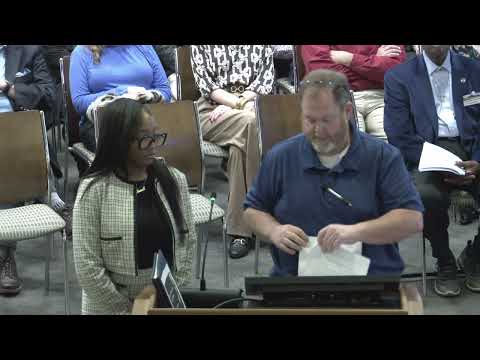
The measure drew extensive public comment from Civic Center employees and from Parks and Recreation staff. Kenice Wiggins, who identified herself as a Civic Center staff member, urged the council to protect employees’ jobs and to ensure staff are consulted. “We want to ask everyone that our voices be heard and that we’re not overlooked when making a decision that will ultimately affect our livelihood and our family,” she said.
Parks and Recreation Director Holly Browder told council the department relies on the same crew of field crews, janitorial staff, paint crews and correction crews to run dozens of athletic fields and 82 restroom facilities across the city; she warned that any shift of those workers to an authority would create operational and scheduling risk unless the city retains and funds the necessary positions. Browder said South Commons and AJ McClung combined produce millions in local economic activity — figures cited in the meeting ranged above $10 million in prior fiscal years — and stressed the need to preserve local leagues and weekday access for residents.
Several council members pledged staff would remain city employees and that the authority’s formation would not instantly terminate existing positions. Councilor Glenn Davis said the authority is a governance and management model used elsewhere that can add oversight and industry expertise without removing existing city accountability. “Nobody’s jobs are changing,” Davis said during debate; “we’re just creating a framework.” City Manager Isaiah Hughley and other managers said they would work with boards and departments to clarify memoranda of understanding, staffing, budget impacts and transition timelines.
Councilors discussed the proposed board composition and the authority’s powers. Under the substitute ordinance the authority would have representation from the trade center and the visitor bureau, a sports council seat, and seats for private‑sector experts. Ex‑officio participants would include a deputy city manager and the parks director (or designee), and the board would bring a candidate for authority executive director to council for review. Councilors and staff said MOU details and budget responsibilities would be worked out before any long-term management contracts or privatization decisions.
The ordinance passed its first reading; council did not adopt it on final reading and many council members said additional work — including meetings with employees, park staff and stakeholders, and development of staffing and MOU details — would be required before final adoption.
What to watch next: The council will return the measure for second reading and final action at a future meeting after staff and the sponsor refine MOU language, clarify any employee transitions and present a proposed organizational chart and budgetary impacts. Civic Center and Parks & Recreation leaders asked for formal briefings for staff before the next reading and for documentation showing how employee duties, schedules and equipment needs will be preserved.