Get Full Government Meeting Transcripts, Videos, & Alerts Forever!
Get email alerts on the Student Eligibility Sports topic
No spam. Unsubscribe anytime.
Committee hears lengthy debate on student eligibility bill; lawmakers defer final action pending related Senate measure
Summary
House Bill 60 would extend Wyoming’s student eligibility rules to the University of Wyoming and community colleges and add biology-based definitions; the measure drew extensive testimony on safety, fairness, implementation and legal exposure.
Representative (bill sponsor) presented House Bill 60, a measure that would extend Wyoming’s existing student-eligibility law to include institutions of higher education and community colleges, add statutory definitions related to biological sex, and remove the existing "fallback" provision in state law.
The sponsor described the bill as seeking to "preserve the Title IX lane for women" and said the measure would place the University of Wyoming and community colleges under the same statutory eligibility rules that currently govern K–12 activities. The sponsor emphasized objective, biology-based definitions for "male" and "female" used in other bills and said the measure is intended to protect safety and fairness in women’s athletics.
State Superintendent Megan Degenfelder testified in strong support, citing safety and competitive opportunity concerns for women’s sports and noting examples from contact sports: "Women's rugby is arguably the most physical sport that exists. It's full tackling with no protection or pads," she said, arguing that biological differences can create safety risks in those activities.
University of Wyoming officials and community college representatives urged caution about parts of the bill and raised operational concerns. Mike Smith of the University of Wyoming said the university did not oppose inclusion in principle but opposed certain provisions that would force teams to forfeit competition. He and others pointed to the practical effects of proposed paragraphs that would bar a public school or college from competing against an out-of-state opponent if the committee knew or reasonably believed that opponent had a male-designated student on its roster for a female-designated team. Smith said the specific paragraphs (notably the new subsections G and H in the draft) went beyond laws passed in other states and could create unintended forfeitures or enforcement difficulties.
Legal and advocacy groups provided conflicting testimony. Alliance Defending Freedom counsel Erica Steinmiller Perdomo supported the bill’s definitions and a private right of action, saying the changes align with similar laws in other states and federal guidance; she described "reasonable degree of certainty" language as a good-faith threshold. Advocates for LGBTQ youth opposed the bill as written, arguing it is exclusionary and may harm transgender students; Wyoming Equality testified that the state currently has few or no transgender athletes participating in school sports and raised concerns about the bill’s social effects.
Community college and university witnesses raised a range of drafting and operational questions: whether the bill’s coverage of "interscholastic" and "intramural" activities is intended, how institutions would verify eligibility and what processes would apply for contested determinations. The University highlighted intramurals and practice situations, emphasizing the need to allow mixed practice and training even where competition rules differ.
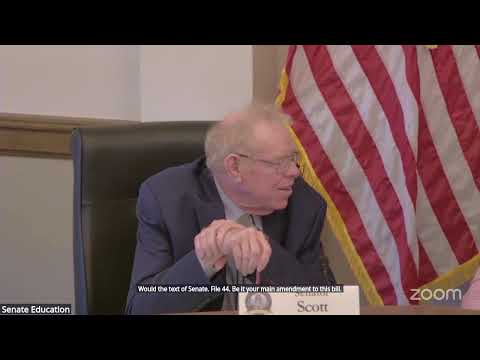
Committee members said they had multiple amendments to consider. Several senators urged holding the bill pending the outcome of a Senate companion measure (Senate File 44), and the chair deferred further action. The committee did not vote to advance House Bill 60 that day; members asked staff to coordinate amendments and indicated they would revisit the bill after additional drafting or if the companion Senate bill did not move forward.
Ending: The committee recessed consideration of House Bill 60 pending possible action on a related Senate bill and further committee drafting; several technical and policy amendments were proposed but not finalized in the session.