Get Full Government Meeting Transcripts, Videos, & Alerts Forever!
Get email alerts on the Voter Identification topic
No spam. Unsubscribe anytime.
Committee tightens voter ID by requiring photo on accepted documents, adopts impediment process
Summary
The committee approved House Bill 206 to require photographs on accepted voter-identification documents and expedited repeal of Medicare/Medicaid cards; members also adopted a hardship/impediment procedure to accommodate voters who lack photo ID.
The Senate Corporations, Elections & Political Subdivisions Committee approved House Bill 206, which removes Medicare and Medicaid cards from the list of acceptable identification to vote in person and explicitly requires that other accepted identification include a photograph.
Representative Weber, the sponsor, said the bill is a ‘‘common-sense’’ step to align voting identification with other everyday uses of photo ID, and he urged an ‘‘I’’ vote. Secretary of State Chuck Gray testified in support and said most voters already present photo ID; he urged against a broad attestation carve-out, arguing a hardship process that allows a free Wyoming ID from the Department of Transportation is the better path.
County clerks told the committee they are concerned for a small number of voters — veterans, seniors, and people whose documents were recently destroyed — who may have difficulty securing a photo ID quickly. Clerks suggested an administrative pathway to accommodate such voters and proposed modest technical edits to proclamation and certification language. AARP and the League of Women Voters urged safeguards so the change does not disenfranchise elderly or disabled voters.
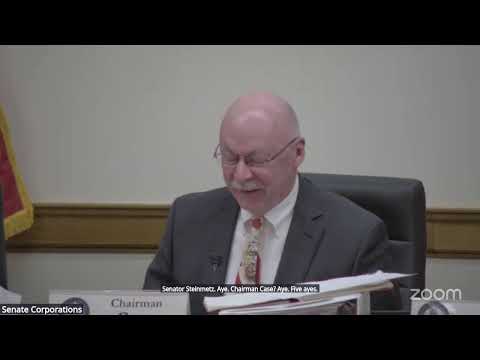
Committee members adopted a conceptual amendment establishing a "reasonable impediment" declaration and a list of supporting documents (for example, certified birth certificate, utility bill, bank statement, medical billing or explanation of benefits) to be used when a voter cannot obtain a photo ID. The committee approved the engrossed bill and the conceptual impediment amendment on roll call and advanced it.
The committee asked the secretary of state and county clerks to continue work on implementation details, including how provisional ballots will be cured, the temporary free DMV ID used to cure provisional ballots, and how counties will handle outreach to affected voters ahead of the new effective date.