Get Full Government Meeting Transcripts, Videos, & Alerts Forever!
Get email alerts on the Anti Money Laundering topic
No spam. Unsubscribe anytime.
Committee approves anti–money-laundering bill as members seek tighter limits on scope
Summary
Lawmakers advanced Senate File 116 to create a state anti–money-laundering offense after consultants flagged gaps connected to recent gaming industry growth; members asked for narrower language to avoid unintended consequences.
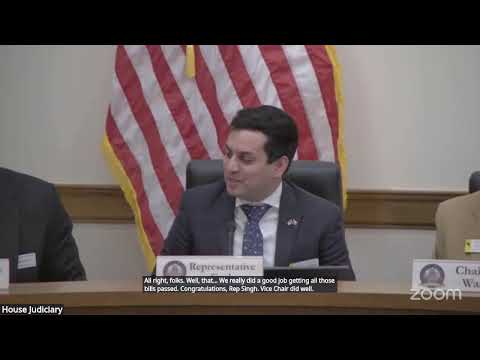
The House Judiciary Committee voted to advance Senate File 116, establishing a state money-laundering offense that lawmakers said is needed as gaming activity expands in the state.
Senator Nethercott, sponsor of the bill, told the committee consultants who reviewed the state’s gaming laws recommended adopting anti–money-laundering language used in other states. He said the draft borrows heavily from a New Jersey model and would criminalize conduct such as structuring, financial transactions intended to conceal the criminal source of property, and investments of illegally derived proceeds.
Nethercott said the bill covers a broad range of schemes, from straightforward examples — bringing large quantities of cash into a gaming facility, converting it to chips, gambling briefly and cashing out — to more elaborate organized-crime methods. He emphasized the draft includes intent elements and references existing federal reporting requirements that already apply to some businesses.
Members raised concerns about overbreadth, especially that early language could criminalize comparatively minor conduct (for example, possession of contraband) or overlap with existing receiving-stolen-property statutes. Representative Jostick and Representative Kelly urged narrowing or adding threshold limits so the bill targets organized and felony-level laundering rather than low-level property offenses.
Several members suggested edits for committee consideration: strike broad possession language, narrow the statute to transactions designed to conceal the source of criminal proceeds, or add a monetary threshold consistent with other felony thresholds. Sponsor Nethercott and supporters said they are open to amendments and to working with the committee to refine the bill.
After discussion the committee voted to pass the bill forward so members could continue work in the next stage; the roll call showed nine ayes and no nos. Lawmakers signaled they will offer committee-of-the-whole amendments to tighten definitions before floor consideration.
Votes at a glance
- Senate File 116 — Motion to advance the bill: moved and seconded in committee. Tally: 9 ayes, 0 nos. Outcome: Do pass.