Get Full Government Meeting Transcripts, Videos, & Alerts Forever!
Get email alerts on the Energy Policy Baseload topic
No spam. Unsubscribe anytime.
Committee backs resolution urging governor to prioritize dispatchable baseload energy over subsidized wind and solar
Summary
The committee approved Senate Joint Resolution 4 asking the governor to favor promotion and export of Wyoming’s baseload resources (coal, natural gas, uranium, hydro) and to oppose taxpayer subsidization of commercial wind and solar.
The committee voted to recommend passage of Senate Joint Resolution 4, a nonbinding measure that asks the governor to promote Wyoming’s "stable dispatchable baseload" energy resources and oppose future taxpayer subsidies for commercial wind and solar projects.
Sponsor Senator Laura Pearson introduced the resolution on behalf of a county central committee. The resolution characterizes Wyoming’s coal, natural gas, uranium and hydro as "cleanest resources" and urged state-level promotion of exports of those baseload resources. In testimony supporters cited grid stability, local economic impacts and concerns about land use and decommissioning waste from wind and solar.
"Baseload power is essential unlike wind and solar," the sponsor said, arguing that fossil‑fuel and nuclear sources provide continuous dispatchable power while wind and solar are intermittent and require backup. Testimony included concerns over turbine and solar‑panel waste and land use impacts; opponents in public testimony argued private landowners should retain the right to lease for wind or solar and that resolutions carry no binding legal force.
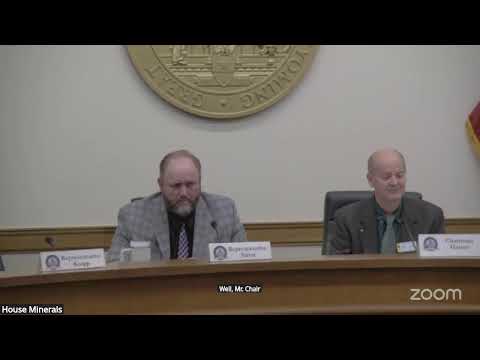
Action: The committee voted by roll call, recorded 8 ayes, 0 noes, 1 excused, and recommended passage. Vice Chair Tarver moved the resolution and Representative Campbell seconded.
The measure is a policy statement asking the governor to oppose subsidized renewable generation and to promote Wyoming baseload exports. It does not change law or appropriations and is nonbinding.