Get Full Government Meeting Transcripts, Videos, & Alerts Forever!
Get email alerts on the Unemployment Insurance topic
No spam. Unsubscribe anytime.
Committee advances bill shortening maximum weeks of unemployment benefits to 20; renaming removed
Summary
The House committee voted to advance Senate File 175, which cuts the state’s maximum unemployment benefit period from 26 weeks to 20 weeks and retains the current name "unemployment insurance" after lawmakers removed a renaming provision.
The House Labor, Health & Social Services Committee on a roll call approved Senate File 175 as amended, a measure that reduces the statutory maximum duration of unemployment insurance benefits in Wyoming from 26 weeks to 20 weeks and preserves the current name of the unemployment commission after members removed a renaming provision.
Sen. John Kolb, the sponsor, framed the bill as a policy choice aimed at encouraging faster reemployment and easing long‑term costs for employers. He told the committee Wyoming’s unemployment trust fund is well capitalized and that most claimants do not exhaust the current maximum. “Wyoming is a very strong employment state… this change will get Wyoming workers back to work sooner,” Kolb said.
Liz Gagan, director of the Department of Workforce Services, provided the department’s data on claim patterns and the program’s administration. She noted the state’s unemployment rate was 3.5 percent and said occupations with longer average durations in recent years included operating engineers and operations managers. Gagan also described reemployment outreach programs and noted that retraining can pause job search requirements for claimants in approved training; roughly 137 claimants were in training in 2024, she said.
Supporters — including representatives of business groups and free‑market advocates — said lowering the maximum weeks aligns Wyoming with several other states and could reduce employer tax rates over time. Laura Pavey testified in support, calling the change “firmly grounded in economic research.” Several business and chamber representatives told the committee workforce shortages make employers sensitive to any measure that might reduce costs and encourage employees to return to work.
Labor and trade union witnesses and some industry representatives opposed the change or urged caution. Marcy Kindred of the Wyoming AFL‑CIO said many Wyoming work patterns are seasonal or cyclical and described examples in which the 26‑week window is used in pieces across a year; she said a shorter maximum could make it harder for skilled, seasonal workers to remain in Wyoming. Phil Cornella of the Operating Engineers testified the proposal would harm seasonal construction workers and risk losing experienced operators to jobs in other states.
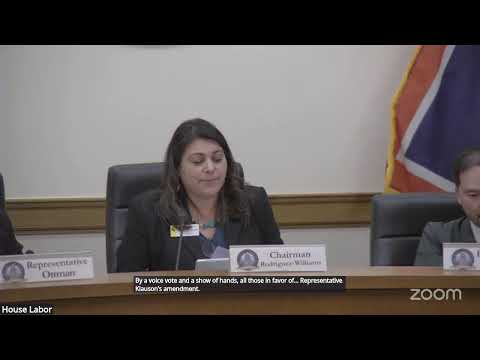
The committee adopted an amendment that removed the bill’s renaming language; Representative Yen said keeping “unemployment insurance” as the statute’s name avoids confusion for claimants and employers. With that amendment, the committee approved the bill on a 7–1 recorded vote.
Under the amended bill, the statutory maximum benefit duration falls to 20 weeks. The measure includes language intended to preserve a federal safety net for extended benefit periods when national conditions trigger federal programs. The Department of Workforce Services noted that administrative impacts vary by employer and industry; the department did not provide a single estimated dollar savings for every employer because experience rating and industry classifications differ.
The committee’s passage sends the bill to the full House for consideration.