Get Full Government Meeting Transcripts, Videos, & Alerts Forever!
Get email alerts on the Driving Privileges Ignition Interlock topic
No spam. Unsubscribe anytime.
Committee allows restricted licenses with ignition interlocks for some convicted of aggravated vehicular homicide
Summary
Lawmakers voted to advance Senate File 71 to allow people convicted of aggravated homicide by vehicle to be eligible for restricted licenses with ignition interlock devices after serving the statutory period of revocation; the change addresses a statutory cliff tied to blood-alcohol thresholds.
The House Judiciary Committee voted to advance Senate File 71, which would allow people convicted of aggravated homicide by vehicle to be issued a restricted driver's license with an ignition interlock after completing the statutory period of revocation.
Sponsor Senator Brennan said the bill resolves a statutory inconsistency that treats a blood-alcohol reading of 0.14 and 0.15 differently for restoration of driving privileges. He described the change as a way to permit an ignition-interlock restricted license after the revocation period even when the conviction involved a higher blood-alcohol content that under current text would make the person permanently ineligible for an interlock-restricted license.
Renee Cocina, deputy program manager for Driver Services at the Wyoming Department of Transportation, explained how the department applies the interlock requirements. She said the department’s rules currently prevent issuing an interlock-restricted license in certain aggravated-homicide-by-vehicle convictions if a specified BAC threshold is met; the bill would allow the department to issue an ignition-interlock restricted license after a person serves the statutorily required period of license revocation.
Committee members asked how the change would interact with commercial driver’s licenses and noted judges still retain sentencing authority. Cocina said a holder of an ignition-interlock restriction is not eligible for a commercial driver’s license; crimes involving commercial driving remain separately disqualifying.
Tyler Lindholm of Americans for Prosperity testified in support of restoring a pathway to licensing for people who have served sentences and completed conditions, saying restoration can help with employment and reintegration, especially in rural areas where driving is necessary.
Speakers including Representative Bratton urged caution and asked for a flowchart or other explanatory materials for legislators to use on the floor. Members discussed public-safety concerns and the desire to balance accountability with reintegration.
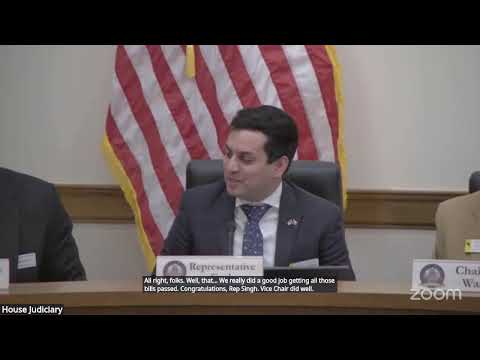
The committee advanced the bill on a 7-2 vote. Representative Bridal, Representative Chestic, Representative Feiler, Representative Kelly, Vice Chair Singh, Representative Webb and Chairman Wausch voted yes. Representative Bratton and Representative Veil voted no. The committee asked the department to provide an explanatory flowchart for the floor debate.
Votes at a glance
- Senate File 71 — Motion to advance the bill: moved and seconded in committee; roll call recorded 7 ayes, 2 nos. Outcome: Do pass.