Get Full Government Meeting Transcripts, Videos, & Alerts Forever!
Get email alerts on the Child Welfare Data Sharing topic
No spam. Unsubscribe anytime.
Committee rejects bill that would let Department of Family Services share client data with providers and agencies
Summary
The House Labor, Health & Social Services Committee defeated Senate File 157, a bill that would have allowed the Wyoming Department of Family Services to share identified and de‑identified data with state agencies and contracted community providers, after debate over privacy safeguards and an opt‑out approach.
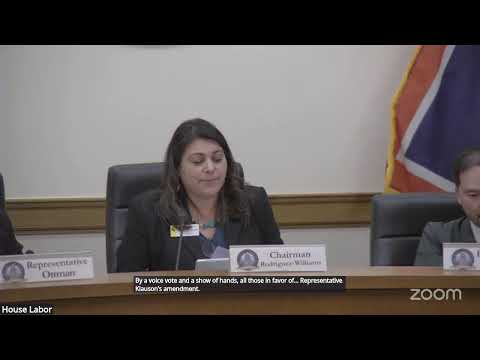
The House Labor, Health & Social Services Committee rejected Senate File 157 on a 4–4 roll call with one member excused, after testimony and debate focused on whether the bill strikes the right balance between improving referrals and protecting family privacy.
Sen. Tim Olson, the bill sponsor, told the committee SF157 would authorize “data sharing between the Department of Family Services and whatever the necessary parties are,” including state agencies and contracted community providers, to make referrals and improve early intervention, and to provide de‑identified information for research and juvenile justice reporting. He said the measure grew from work by the Mental Health and Vulnerable Adult Task Force and a subsequent joint judiciary effort.
Corinne Schmidt, director of the Wyoming Department of Family Services, described three uses the bill would authorize: sharing minimal referral information (for example, a name and phone number) to connect families with voluntary services; sharing program datasets with other agencies for operational needs such as Medicaid fraud and duplicate‑billing review; and providing de‑identified data for research, including a longitudinal education dataset. “If it's research … anything that's identifiable is deleted,” Schmidt said, adding that rulemaking would define specific purposes and data elements and include a public comment period.
Stefan Johansen of the Wyoming Department of Health emphasized existing privacy guardrails when health data are shared with the health department, noting federal rules such as the Health Insurance Portability and Accountability Act apply to protected health information. He said the Department of Health takes security “very seriously” and that information shared with the department is governed by state and federal privacy law.
Supporters, including Lloyd Larson and representatives of youth services and community behavioral health providers, testified that statutory restrictions currently leave “silos” that block timely coordination and referrals. Andy Somerville of the Wyoming Association of Mental Health and Substance Abuse Centers said the change would let community mental health centers reach out to families who accept services rather than shifting the entire burden to those families.
Opponents pressed privacy concerns. Laura Pavey testified in strong opposition, saying the proposal could enable creation of long‑lived family profiles and argued the bill allocates no funding for new security measures. Pavey warned the state has previously suffered data breaches and urged rejection.
The bill as drafted would have established a new statutory section (9‑2‑2104) authorizing the DFS director to review and share program effectiveness data "to the extent permitted by federal law" for referrals, provision of services and bona fide research. It would also have required DFS to report on data shared and safeguards in place to the Joint Judiciary Interim Committee by Oct. 1, 2025, and given the DFS director rulemaking authority, including an opt‑out mechanism for certain types of sharing.
Committee members who supported the bill said the opt‑out, rulemaking steps and a reporting deadline were designed to preserve safeguards while reducing missed opportunities for early services. Members who opposed it cited the potential for expanded surveillance and the bill’s lack of dedicated funding for security or infrastructure.
The sponsor moved the bill; the roll call produced an even split and the measure failed. The committee recorded the outcome and closed public comment.
The debate left several items for potential follow up: the scope of rulemaking, the exact language of opt‑out provisions, the composition of de‑identified datasets allowed for research, and the planned report to Joint Judiciary by Oct. 1, 2025.