Get Full Government Meeting Transcripts, Videos, & Alerts Forever!
Get email alerts on the School Bond Program Management topic
No spam. Unsubscribe anytime.
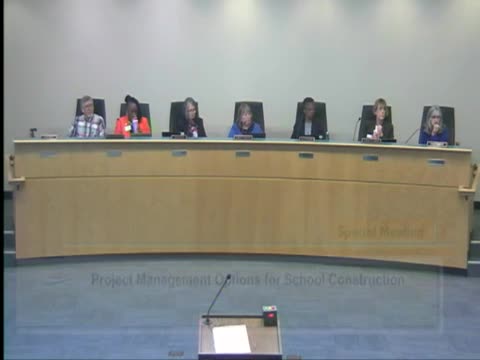
Commissioners, school officials discuss program management approach for $300M bond; board asks staff to begin interlocal talks
Summary
County and school-district leaders discussed options for program and project management to implement the $300 million school bond and related pay‑as‑you‑go funds; commissioners asked staff to begin interlocal agreement discussions with both districts.
County and school officials outlined options for program and project management to implement Orange County’s school capital program, which combines a $300 million bond and an expected pay‑as‑you‑go allocation. The presentation described roles, procurement approaches and the benefits of a county-level program management office (PMO) that would include project managers for individual school projects.
Jessica Killian, director of program management at Turner, Townsend & Heery, told the Board of County Commissioners a PMO would set a master budget and schedule for the 10-year program, help manage escalation risk, and provide a single consistent reporting structure for both Orange County Schools and Chapel Hill‑Carrboro City Schools.
“A program manager who is familiar with K‑12 bond programs can help you lay out a plan that reconciles…projects over 10 years,” Killian said, describing program-level planning (budget, schedule, roles) versus project-level delivery (design, procurement, construction oversight). She said the PMO model typically includes a program director and dedicated project managers, cost estimators and schedulers as needed.
The presentation said the county, as the funding authority, would need an interlocal agreement (ILA) with each district to define roles and responsibilities; districts would retain authority over educational program and design decisions under the expected model. County and district representatives emphasized the procurement should be collaborative: the RFQ/RFP process and final contract should include county and both districts in evaluation.
Commissioners asked about safeguards to prevent the PMO from overriding district design authority, how program management would handle cost escalation, and whether a single firm should provide both program management and project managers. Killian and county staff said the PMO should be selected jointly and that contract language and governance structures (an ILA and a project‑level authorization process) would preserve district decision authority while providing consistent county-level financial and schedule oversight.
Several commissioners urged early, frequent communication with the public so residents understand timing and cash‑flow realities; commissioners also requested reference checks with other jurisdictions that have used PMOs. Chapel Hill‑Carrboro Schools and Orange County Schools officials said they support program management in concept, subject to being “at the table” for procurement, scope and governance decisions.
County manager and commissioners asked staff to begin formal ILA discussions with both school districts and to return with options that include procurement methods, cost estimates for an external PMO versus in‑house staffing, and recommended governance language. No formal vote on procurement or vendor selection took place.