Get Full Government Meeting Transcripts, Videos, & Alerts Forever!
Get email alerts on the Health Services.pediatric Hearing topic
No spam. Unsubscribe anytime.
Committee amends bill to strengthen pediatric hearing‑aid coverage, limits replacement frequency to three years
Summary
The committee unanimously advanced an amended Senate Bill 93 focused on pediatric hearing‑aid coverage, narrowing the bill to children, requiring adequate pediatric audiology networks, and setting a three‑year replacement interval consistent with Medicaid policy.
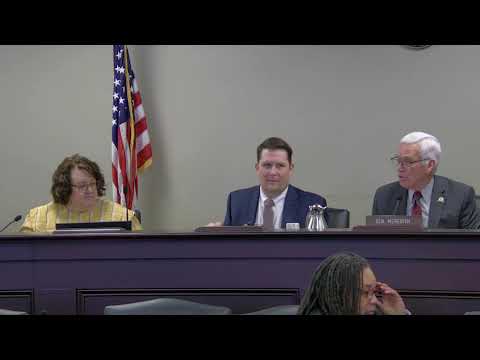
A Senate committee on Wednesday amended and unanimously advanced Senate Bill 93, a measure aimed at strengthening insurance coverage and network requirements for pediatric hearing aids.
Senator Karen Berg, the bill’s sponsor, told the committee the original bill included adults but the committee substitute narrows coverage to children and adds a requirement that third‑party administrators and insurers maintain pediatric audiologists in network. "The intent of this bill was really for children," Berg said, explaining the substitute removes adults from the bill while addressing network adequacy concerns.
Jennifer Hughes, identified in committee as the impetus behind the bill and who testified with her 5‑year‑old son Everett, described the family’s experience paying out of pocket for hearing aids. "When Everett turned 3, his audiologist recommended upgrading his hearing aids, and she quoted us a cost of $5,000... So long story short, we paid the full $5,000 for the hearing aids," Hughes said, describing how insurer allowable and balance‑billing practices left her family responsible for large costs.
Shelley Moats, a pediatric audiologist testifying in support, told the committee that early identification and intervention improve language outcomes and that hearing aids typically have a life expectancy of about five years but can require replacement because they are worn by active children. Moats said current device warranties commonly include unlimited repairs and a one‑time loss/damage replacement during the warranty period.
Committee members asked technical questions about costs and replacement intervals. Senator Mills asked whether parents should expect responsibility for maintenance and replacement; Moats replied that manufacturers typically include repair coverage and that the bill was updated to set a replacement interval not more frequent than every three years, noting that this mirrors current Medicaid guidelines in Kentucky.
Testimony included statistical context: about 58,000 babies were born in Kentucky in 2023, and proponents said roughly 175 of those births involved permanent hearing loss. An expert witness estimated that, in current dollars, families may spend about $30,000 on hearing devices alone from birth to age 18 if coverage gaps persist. Proponents urged the committee to address benefit structures and contracting practices that leave families paying high out‑of‑pocket costs.
After adopting the committee substitute, the committee voted unanimously to report the bill favorably.
Votes at a glance: Committee adopted the committee substitute for SB 93 and advanced the bill with unanimous support.
Provenance: Topic introduction excerpt: "Next item on the agenda is hearing on senate bill 93. Senator Berg, Certainly welcome you to the table." (block_id: "block_373.97", local_start:0, local_end:98, evidence_excerpt:"Next item on the agenda is hearing on senate bill 93. Senator Berg, Certainly welcome you to the table.")
Topic finish excerpt (vote): "Motion passes unanimously. So Senate Bill 93 is amended. Passes with favorable expression." (block_id: "block_1074.695", local_start:0, local_end:110, evidence_excerpt:"Motion passes unanimously. So Senate Bill 93 is amended. Passes with favorable expression.")