
Public criticizes plan to cut second public-comment session; board members debate timing amid ethics inquiries
Get AI-powered insights, summaries, and transcripts
Sign Up Free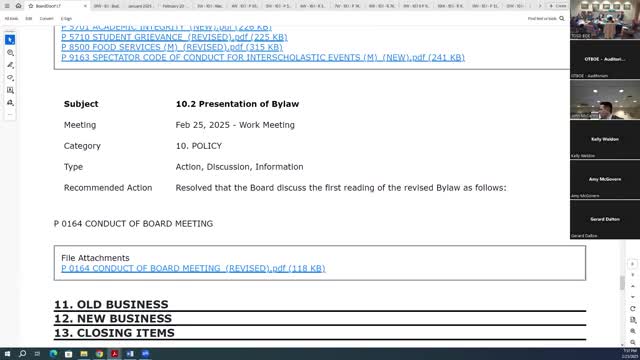
Summary
Trustees discussed a proposal to eliminate the meeting's second public-comment period. Several board members defended the change as efficiency; public commenters and some trustees said removing the late comment period reduces transparency, and at least one public speaker linked the timing to pending ethics complaints against board members.
The Township of Ocean School District Board considered reducing its two public‑comment sessions to a single session, drawing objections from residents and debate among trustees about timing and optics.
A board member spoke in opposition during policy discussion, saying the proposal to eliminate the first or second public comment "is obviously an attempt to limit negative exposure" while ethics complaints involving board members are pending. The board's attorney, according to trustees, advised that pending ethics complaints should not be discussed in public session.
During the public‑comment portion of the meeting, resident Keith Chapman said eliminating the second public comment "doesn't look good" and would make it "more difficult for the public" to be heard. Alex Hayes, identified as "Oakhurst" in remarks to the board, also criticized the move as "preposterous" and urged trustees to keep the late‑meeting comment period so members of the public can react to decisions made during the meeting. Hayes referenced two separate ethics complaints being processed through the State Ethics Commission and the Office of Administrative Law, and said the timing of the proposal created a negative appearance.
Trustee Yellman defended the timing and said the change was intended to increase opportunities for speakers earlier in meetings and gave an example of a speaker who benefitted from speaking earlier in a recent meeting. She also noted attorney guidance that the board should not discuss pending ethics matters in public. Trustees did not record a formal vote on the policy change during the Feb. 25 session.
Members of the public who addressed the board said they want clear, accessible budget and meeting materials online and asked for timely announcements about board appointments. Administration read the board’s rules for public participation at the start of the public‑comment period and reminded attendees that each speaker is limited to five minutes.
No formal board action to change the public‑comment schedule was recorded in the meeting minutes on Feb. 25; trustees indicated the second public comment proposal had been discussed and would return under future agenda procedures if pursued.