Get Full Government Meeting Transcripts, Videos, & Alerts Forever!
Get email alerts on the Housing Infill topic
No spam. Unsubscribe anytime.
Grass Valley council approves SB 10–style ordinance to allow up to 10 dwelling units in Town Core
Summary
Council voted 4-1 to adopt an ordinance implementing SB 10 provisions to allow eligible mixed‑use projects to include up to 10 dwelling units per parcel in the Town Core, with parking and short‑term rental restrictions; planning commission recommended approval.
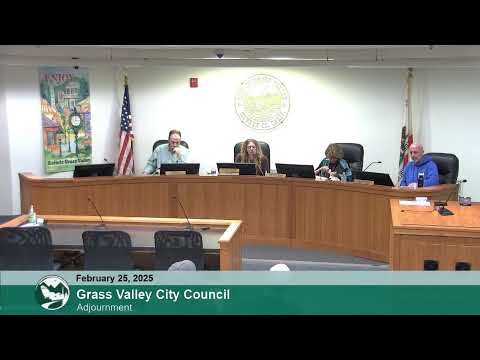
Grass Valley City Council on Feb. 25 approved an ordinance implementing Senate Bill 10 provisions to allow eligible mixed‑use projects in the Town Core to include up to 10 dwelling units per parcel. The motion passed 4-1.
The ordinance adds an amendment to Title 17 of the Grass Valley Municipal Code to permit higher density on designated infill parcels consistent with Government Code section 65913.5 (SB 10). The proposal includes a 10‑unit per parcel cap, a requirement that at least two‑thirds of the property be devoted to residential use, parking mitigation (off‑street parking agreements at a ratio of one space per unit within 1,300 feet), and a prohibition on short‑term rental use for units created under the ordinance via a deed restriction.
Amy Wilson, city planner, told the council the ordinance builds on prior council direction from September 2023 and planning commission review; the planning commission recommended approval at its Jan. 21 meeting. Wilson said SB 10 includes language that adoption of an ordinance under its provisions is not a project subject to CEQA. She described the ordinance—s goals as encouraging downtown revitalization, repurposing older buildings and increasing housing near transit.
Public commenters generally supported the move, calling it a return to the historical mixed‑use model (shopkeepers living above stores) and urging the council to ensure conversions remain affordable and fire‑safe. Several speakers urged incentives or deed‑restricted units rather than mandatory affordability requirements.
In council discussion, members asked about parking solutions and whether city lots could be used as offsite parking if conversions require spaces. Staff said owners could lease parking and the city could consider leasing its lots if parking became a development barrier. Councilmembers also discussed building safety upgrades (sprinklers, rewiring) that would accompany conversions through the building permit process.
The ordinance passed by voice vote with one dissent. Councilmembers Tom Bonamolo, Joseph Ivy and Mayor Hillary Hodge voted in favor; Councilmember Ralph Arbuckle voted against the ordinance.