Get Full Government Meeting Transcripts, Videos, & Alerts Forever!
Get email alerts on the Sex Education Transparency topic
No spam. Unsubscribe anytime.
Senate Bill 442 would require school boards to approve and publish human sexuality materials; bill draws mixed reactions
Summary
Senator Byrne reintroduced a bill requiring local school boards to approve and publish materials used for human sexuality instruction and to make course information conspicuous on school websites; supporters called it transparency; opponents warned it could politicize instruction and duplicate existing law.
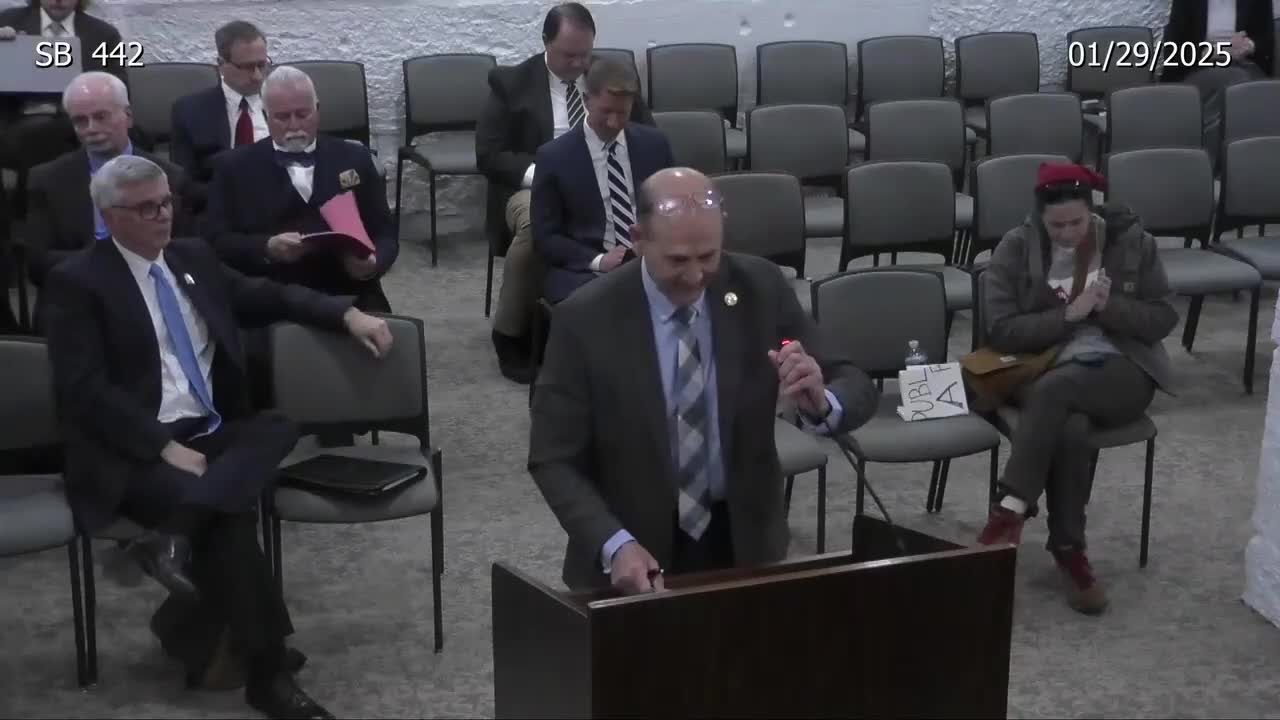
Senator Byrne presented Senate Bill 442, which would require local school boards to approve all materials used for instruction concerning human sexuality and to publish basic information about each related class, including course titles and materials, in a conspicuous place on the school’s public website.
Byrne said the bill is aimed at giving parents and taxpayers easy access to what is being taught in sensitive subject areas and asserted that local school boards — as elected bodies — should be responsible for approving materials. He told the committee the measure respects local control by leaving content decisions to the boards while increasing transparency.
Committee members and witnesses raised several concerns. Opponents, including the ACLU of Indiana, said local districts already can and do manage curriculum and that the bill would impose annual posting and approval burdens on school boards. The ACLU noted that the bill uses the broader term “human sexuality,” which is not defined in state code, and that the requirement to post materials annually could be significantly more burdensome than current statutory requirements for parental notice specific to sexual‑health instruction.
Supporters, including the American Family Association of Indiana and other conservative advocates, characterized SB442 as a parental‑rights and transparency measure and said it would help parents decide whether to opt out of instruction. Several senators questioned how the bill would interact with existing Title 20 provisions that already prescribe parental notification, opt‑out rights and requirements for sexual‑health instruction.
Committee members debated whether the bill’s language was duplicative of existing code, whether it could run afoul of copyright for third‑party materials, and whether it might politicize instruction in certain communities. Some members suggested the core goal — clearer notice and access for parents — could be achieved with narrower, more specific language.
Ending: Senator Byrne said he would review the committee’s concerns and technical questions ahead of the next appearance of the bill; no committee vote was recorded in the transcript.