Get Full Government Meeting Transcripts, Videos, & Alerts Forever!
Get email alerts on the Public Transit topic
No spam. Unsubscribe anytime.
Planning commission hears early data on Mosby Street bus platform; staff will continue monitoring
Summary
City staff and GRTC presented early survey and observation results for a modular bus boarding platform on Mosby Street. Public reaction has been positive; limited driver- and field-observation data show no major change in illegal passing, and the city will monitor performance before making permanent changes.
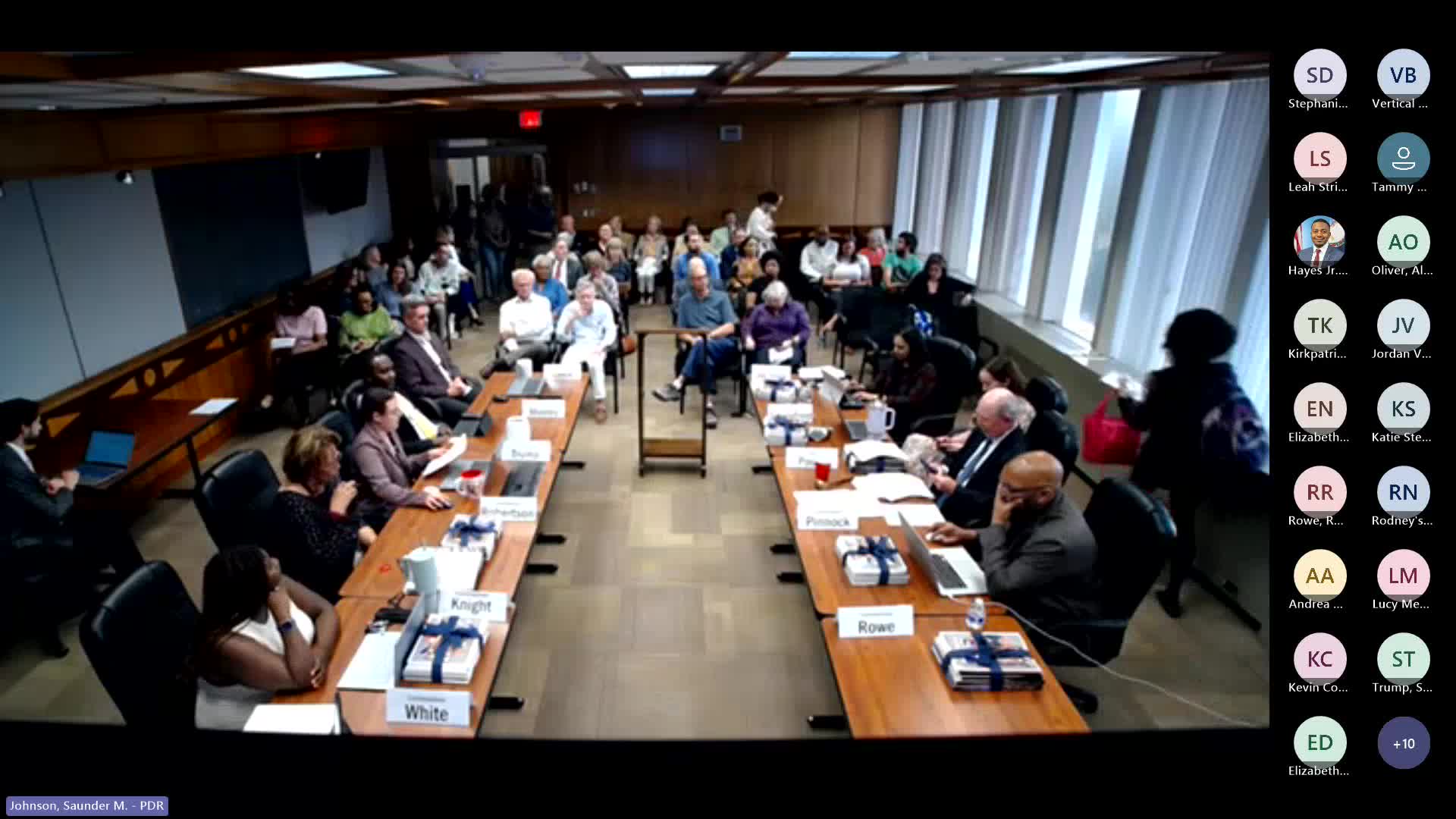
City planning commissioners received an update on a temporary, modular bus boarding platform installed as part of a traffic‑calming project on Mosby Street and Mechanicsville Turnpike.
Kelly Rowan, of the Office of Equitable Transit and Mobility, told the commission the platform is a “lighter, quicker, cheaper” treatment installed from recycled plastic and built to fit the site. Rowan said staff have gathered community feedback, conducted driver surveys with the Greater Richmond Transit Company (GRTC) and made on‑site observations since installation.
Rowan said staff collected about 50 paper and online public surveys from neighborhood residents and transit users and 23 responses from GRTC drivers who operate the route that serves the stop. The public surveys showed a shift toward people feeling “very safe” or “somewhat safe” walking and crossing near the stop after the installation, Rowan said. "People feel like they were seen and heard," she said.
From operator responses and field observations, staff found little change in the frequency of motorists passing stopped buses. Rowan said drivers reported roughly the same proportion of “always or often” passing occurrences before and after the platform went in. Independent five‑hour spot observations conducted on five different days showed about 12 percent of cars that were briefly stopped behind a bus eventually passed it, she said.
GRTC driver Guy Roach, who worked with the city on the survey, confirmed the driver questionnaire included a not‑applicable response in the second question set and that some paper surveys had omitted answers; staff treated those as NA to keep counts consistent. Roach also said the driver sample was limited to operators on that specific route.
City staff said the platform replacement plan includes swapping out temporary planters when the original shipped planters arrive and that the centerline hardening option (placing flexible posts in the double yellow) was discussed but the city traffic engineer advised holding off because posts can be damaged and create debris hazards. Rowan said the traffic engineer recommended continued monitoring rather than immediate further hardware changes.
Staff recommended continued data collection and monitoring, with a review in roughly 3 to 5 years to decide whether to make the platform and other traffic‑calming elements permanent or test alternative treatments. No regulatory or enforcement action was proposed at the meeting.
Commissioners asked about sample sizes, who completed the surveys and the options staff used to code nonresponses; Rowan and Roach said the bulk of the public responses were collected in person via paper surveys and outreach on site and that driver responses were limited to operators assigned to the route. The city will return with additional speed and volume data in about six months once external processing of that instrumented data is complete, Rowan said.
For now, staff will continue observations, collect more surveys and coordinate with the city traffic engineer and GRTC before recommending further changes.