Get Full Government Meeting Transcripts, Videos, & Alerts Forever!
Get email alerts on the Tax Policy topic
No spam. Unsubscribe anytime.
Tonawanda holds public hearing on law to allow exceeding New York tax cap; residents voice concerns
Summary
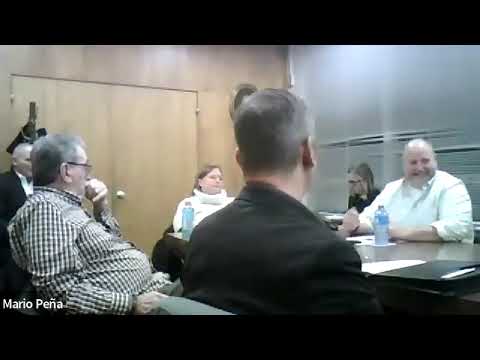
Mayor John White opened a public hearing Thursday on a proposed local law that would let the City of Tonawanda exceed the New York State tax cap if future circumstances require it, calling the measure a contingency tool; residents filled the council chamber to oppose granting that authority.
Mayor John White opened a public hearing on a proposed local law that would authorize the City of Tonawanda to exceed the New York State tax cap if unforeseen circumstances require it, saying the authorization would be a contingency tool the city could use only if necessary.
The measure would not itself raise taxes; it would give the city the option to exceed the state's statutory tax levy limit later in the budget process. "This is merely a tool in our pocket and in the pocket of the treasurer in case the financial situation dramatically changes," White said during the hearing, adding the administration's current intention is to continue efforts to stay under the tax cap.
City Treasurer Adam McNeil, who requested the measure, told the council the authority is intended to preserve the city's financial flexibility and reassure creditors that officials can respond to sudden fiscal shocks. McNeil described the request as a prudent contingency, not a guarantee taxes will be raised.
The hearing drew more than two dozen residents who raised questions about reassessments, the size of the city's reserve fund, recent property tax increases and the city's long-term revenue plan. Many speakers urged the council to reject giving itself the option to exceed the cap.
"I'm unemployed ... there's no jobs here," said Maureen, a resident who spoke during the hearing, questioning whether new development would produce widespread local employment and urging caution about raising the tax burden on homeowners. Pat McCarthy, another resident, told the council to "stop the reassessments," an appeal echoed by several homeowners who said reassessment-driven increases had sharply raised their bills.
Council Member Sean Rautenstrail (identified in remarks as Sean) and other members spent part of the hearing explaining how reserves and the general fund have been used in recent years. Rautenstrail detailed city budget figures cited by council members: he referenced an operating figure and the adopted 2025 budget and warned that continuing to draw on reserves without revenue gains could put pressure on taxpayers in coming years.
Several commenters suggested alternatives to an override tool, including shared services or consolidations with neighboring jurisdictions and more aggressive efforts to attract downtown businesses. Others, including business owners on Main Street, said they support efforts to bring more customers downtown but asked for clear plans tying development to predictable revenue.
Mayor White and other officials repeatedly emphasized that the local law would permit the council to exceed the cap in an emergency or other distinct circumstance; it would not automatically change the tax levy. "Many municipalities pass this same resolution early January each year just to have this available," White said.
The hearing did not include a final vote on the local law. The council must consider public comment, then the council may vote on the measure at a subsequent meeting. Council members said they will review the public input before deciding whether to place the override authority on the books.
Votes at a glance
At the meeting the council also adopted five routine resolutions and one contested item related to Canal Fest. Below are the items taken and their outcomes as recorded by the deputy clerk.
- Resolution 1 (accept minutes from 01/21/2025): Adopted (roll call recorded; deputy clerk declared adopted).
- Resolution 2 (ratification of negotiated benefit for the Uniform Professional Firefighters, Local 859, described at the meeting as a post-retirement health benefit negotiated through collective bargaining): Adopted (roll call recorded; council members voted to approve the negotiated benefit). Council Member Fisher commented that the change "will offer some type of health care benefit in retirement" for firefighters.
- Resolution 3 (Canal Fest agreement and funding, including a negotiated reduction in the city's contribution and a reimagined schedule): Adopted after extended debate. Council debate centered on whether to continue Canal Fest in a reimagined form, balancing heritage and costs. Council discussion and the mayor's presentation explained the event will be shortened from eight days to six days for 2025, with Sunday and Monday scaled back on the city side and rides moved to the North Tonawanda side; the city contribution was reported by council members as reduced from $35,000 to $25,000 for 2025. Council member remarks split: Councilman Sheasley urged putting a referendum to the voters; Council Member Fisher described the change as an "experiment" and urged a trial this year. The deputy clerk recorded a roll call and the resolution was declared adopted.
- Resolution 4: Adopted (roll call recorded; deputy clerk declared adopted).
- Resolution 5: Adopted (roll call recorded; deputy clerk declared adopted).
What it means
If the council later votes to adopt a local law authorizing an override of the tax cap, that action would only provide the council an option during a future budget cycle; it would not itself change this year's levy. Officials said the measure is intended to protect services and preserve fiscal flexibility in case of an unexpected large cost or revenue loss, while opponents said it risks eroding taxpayer protections and should not be granted without clearer limits or public approval.
Officials next steps
The public hearing record will be part of the council's materials as members consider whether to adopt the local law at a future meeting. Several council members invited residents to follow the council agenda, attend budget hearings, and contact their elected officials about priorities for services or spending.