Get Full Government Meeting Transcripts, Videos, & Alerts Forever!
Get email alerts on the Federal Education Advocacy topic
No spam. Unsubscribe anytime.
Board member reports from NSBA advocacy trip: IDEA funding, opposing vouchers and AI in education discussed
Summary
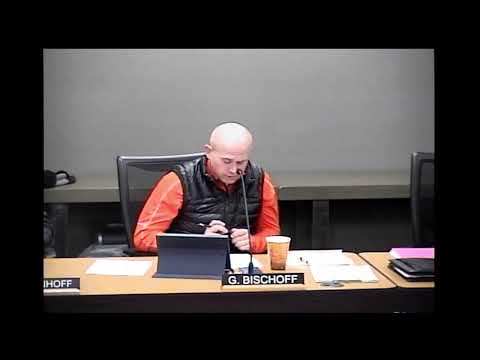
Board member Garrett Bischoff represented the district at an NSBA leadership and advocacy event in Washington, D.C., and reported on federal priorities including increased IDEA funding, Title I and CTE support, digital access, and concerns about vouchers; he also described AI demonstrations shown at the conference.
Garrett Bischoff, who represented the Associated School Boards of South Dakota at the National School Boards Association (NSBA) Leadership Seminar and Advocacy Institute, reported to the Huron board on his trip to Washington, D.C.
Bischoff said the NSBA advocacy agenda emphasized pushing Congress to fund the Individuals with Disabilities Education Act (IDEA) at higher levels (the meeting materials cited that IDEA is currently funded at roughly 12% of its intended target and advocates aim to increase funding toward 40% over a decade). He said attendees discussed strengthening Title I and career and technical education (CTE) investments, promoting digital access and cybersecurity, prioritizing student health and safety, and opposing school vouchers in all forms.
Bischoff described sessions on artificial intelligence (AI), including demonstrations of tools that can summarize long school-board meeting recordings or long PDFs into short audio or text briefs; he said vendors showed education-oriented AI tutoring tools and other classroom applications. He also recounted meetings on Capitol Hill with Sen. Mike Rounds and a visit to Sen. John Thune’s office, where advocates raised federal funding priorities and voiced opposition to vouchers.
Bischoff said the delegation discussed federal priorities with senators and that the trip included dialogue about the possibility of eliminating the U.S. Department of Education — a proposal he said advocates and board members did not uniformly support. He presented the report as informational and did not propose formal board action at the Feb. 10 meeting.