Get Full Government Meeting Transcripts, Videos, & Alerts Forever!
Get email alerts on the Public Safety topic
No spam. Unsubscribe anytime.
House committee backs bill to criminalize loitering drones over critical infrastructure, lets law enforcement disable devices
Summary
The Committee of the Whole recommended passage of Senate File 132 to make it a misdemeanor or felony to operate unmanned aircraft systems over specified critical infrastructure or to loiter with potentially nefarious intent; the bill includes exemptions and authorizes law enforcement and the governor to act to disable offending drones.
The House Committee of the Whole recommended passage of Senate File 132, a bill targeting unmanned aircraft systems that loiter over or photograph critical infrastructure and critical systems. The bill drew extended floor debate about enforcement, airspace jurisdiction and the proper effective date.
Representative Larson JT, a primary floor sponsor, told members the measure is a response to incidents reported by law enforcement and local infrastructure operators, including reports of large drones "the size of an SUV" loitering near plants and following law enforcement vehicles. The bill would prohibit intentionally photographing, loitering over, or otherwise operating an unmanned aircraft near critical infrastructure or critical systems, with listed exemptions for FAA‑authorized operations, governmental entities, utility owners and their agents, law enforcement, emergency medical services and similar official activities.
Penalties would range from misdemeanor sanctions—up to six months and fines—for initial offenses to felony penalties and higher fines for repeat or aggravated conduct. The bill authorizes peace officers to take "reasonable actions" to prevent or stop unlawful use of unmanned aircraft, including disabling, damaging or removing the device. It also authorizes the governor to order the National Guard to assist in such actions.
Members raised questions about federal preemption of airspace above certain altitudes, implications for hobbyists who use flight‑planning apps, and the practicality and liability of physical devices or actions used to disable drones. Representative Heiner, committee chair, and Representative Larson JT said law enforcement has consulted with federal agencies but still lacks an obvious path to address the reported incidents. Some members urged caution and asked for clarity on enforcement tools and liability; others said immediate action was needed because of ongoing incidents.
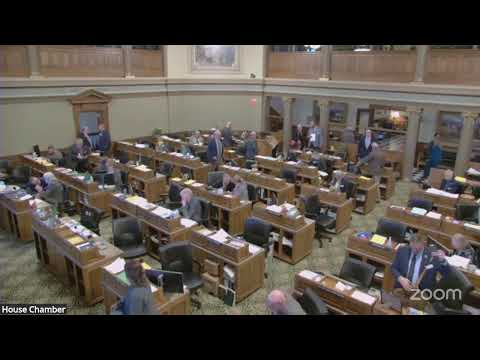
Following debate the Committee of the Whole adopted the committee recommendation that the bill do pass and approved the committee amendment changing the effective date to immediate and adding provisions addressing harassment of wildlife or livestock. The committee report will be sent back to the House for further action.
Ending: The bill moves forward with committee support; sponsors said they will continue to examine implementation and liability issues as the measure advances.