Get Full Government Meeting Transcripts, Videos, & Alerts Forever!
Get email alerts on the Comprehensive Plan topic
No spam. Unsubscribe anytime.
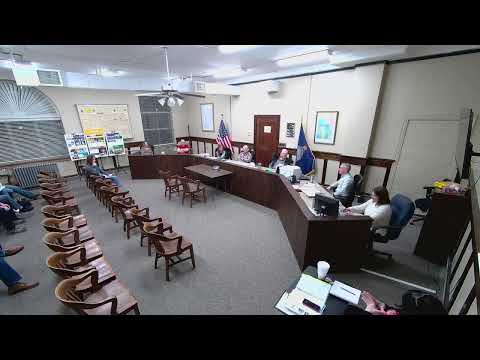
Planning commission continues review of draft comprehensive plan, schedules leadership workshop and public hearing
Summary
The Osage County Planning Commission spent the meeting reviewing a draft comprehensive plan with planner Russ, discussed rural infrastructure (roads, water, sanitation), renewable energy policy, and community survey results. The commission agreed to hold a leadership workshop and a public hearing in March and to solicit department‑level input.
The Osage County Planning Commission advanced its review of a draft comprehensive plan on Feb. 14, hearing a chapter‑by‑chapter briefing from planning staff and agreeing to a leadership workshop and a March public hearing to gather department and public input.
Russ, the planner who presented the draft, described the document as "think of it as a shell of a comprehensive plan" and said the plan is intentionally general so it can be supplemented with more specific regulations later. He advised the commission that the comprehensive plan should identify issues for follow‑up (for example, sanitation code updates or zoning amendments) and not itself attempt to be a detailed ordinance book.
Commissioners and staff spent much of the meeting on infrastructure topics typical for a rural county: road standards, rural water districts and limits on sewer and water capacity, building codes and the county's ability to require code enforcement or a building inspector. The planner said Osage County had previously amended the plan and zoning regulations in 2022 with language addressing renewable energy, and described the approach as a two‑step process: include policy language in the comprehensive plan, then amend zoning regulations as needed.
Participants discussed several recurring local problems: subdivisions created without sufficient on‑site water or sewer infrastructure, minimum‑maintenance roads that require property owners to improve road access before development, and the high cost of extending water mains. The planner said a Pomona Lake subdivision study will be prepared as an offshoot of the comp plan work to examine underdeveloped subdivisions and possible solutions.
Staff summarized results from a county survey that had drawn about 215 responses: respondents rated the county's rural atmosphere, proximity to family and small towns as top reasons to live in Osage County; single‑family housing and senior housing were the most supported development types; a majority (about 66 percent of 142 respondents) supported adopting building codes; and many respondents opposed large renewable energy projects (comments included requests to "keep them out"). The presenter said the survey spreadsheet includes detailed comments on topics like sidewalks, trails and local priorities.
On scheduling, the planner recommended and the commission agreed to hold a leadership workshop with department heads and elected officials on March 11 and to set a public hearing in March to begin the statutory adoption process; the planner said it is acceptable to hold the public hearing without immediately making a recommendation and that any recommendation to the county commission can follow after further review. He said he will prepare a short memo for leadership outlining the plan, adoption steps and a short implementation matrix.
Commissioners and staff also discussed next steps for implementation: identifying specific zoning or sanitation code changes that flow from the plan, preparing short staff reports that tie permit decisions to comp plan goals, and scheduling annual reviews of the comp plan to identify any needed amendments.
No formal vote to adopt the comprehensive plan was taken at the meeting; the outcome was to continue review, solicit department and public input, hold the March 11 leadership workshop and proceed with a March public hearing notification process.