Get Full Government Meeting Transcripts, Videos, & Alerts Forever!
Get email alerts on the Budget topic
No spam. Unsubscribe anytime.
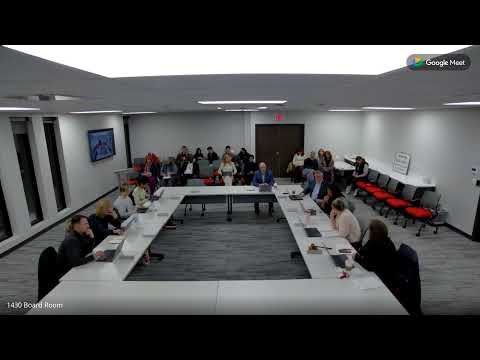
Niskayuna BOE previews $115.7M working draft budget with $1.1M in new investments
Summary
At its Feb. 25 meeting the Niskayuna Central School District presented a working draft 2025–26 budget that would hold current programs while adding roughly $1.1 million in new staff and services; the draft projects a $115.7 million spending plan and a tentative tax-levy increase below the state cap projection.
NISKAYUNA, N.Y. — The Niskayuna Central School District presented a working draft of its 2025–26 budget at the Board of Education’s Feb. 25 regular meeting, showing a $115.7 million spending plan that includes roughly $1.1 million in new investments and a preliminary tax-levy increase estimate of about 1.92 percent.
The working draft, presented by district business staff and the superintendent, projects a 4.46 percent increase in spending over the current year driven by contractual costs, benefits and the new investments. The presenters said state aid increases — including a projected $3.3 million rise in total state aid and roughly $2.0 million in additional foundation aid in the governor’s executive proposal — account for a substantial portion of non-tax revenue growth.
Superintendent Carl said the district is "trying to strike the right balance between excellence and program and affordability for our community and our taxpayers," and emphasized the draft status of the numbers. The administration described the draft as a working document that will be refined through the finance committee and additional board meetings in March before a final budget adoption in April.
Why it matters: the budget covers core classroom and support staffing, special education services, security investments and the district’s multi-year capital plan; changes influence the tax levy voters will be asked to approve and the resources available to schools.
Key details and timeline
- Total proposed spending (working draft): $115,700,000, a 4.46% increase over the current year. - New investments included in the working draft: about $1,100,000 (approximately 11.6 full-time-equivalent positions across categories such as special education, student mental-health support, facility and security staffing). - Projected tax levy to fund the draft: just above $66,000,000 (about a 1.92% increase); the district’s tax-cap calculation currently projects a limit around 3.63% (approximately $67,100,000) based on state factors and exclusions related to capital debt. - State aid: the draft assumes a $3.3 million increase in state aid, driven largely by foundation aid and modest growth in transportation and special-education reimbursements. - Next steps: finance committee review (meeting referenced for the coming Friday), board discussions March 11, March 20 and March 25, budget adoption targeted for April 8 (final deadline April 22).
New investments under discussion
School leaders presented a menu of preliminary expenditures the administration recommends for next year should budget capacity allow: additional special-education sections (notably for the communications program), expanded OT/PT staffing, a K–5 summer learning academy continuation, restoration of a district-level school resource officer and additional full-time security monitors at elementary sites, and a proposed director of science and technology to support curriculum and instruction. The administration said some items remain under consideration (elementary ELA curriculum adoption, additional counselors/social workers, facilities and grounds staffing and expanded communications capacity) and will be finalized as staff identify internal budget capacity and state aid is confirmed.
The administration noted the district will continue to search for in‑budget efficiencies and possible repurposing of existing funds before asking for larger tax-levy increases. The presenters also said final state budget action could alter state-aid figures upward from the governor's executive proposal.
Ending: The board did not vote on the budget draft at the Feb. 25 meeting; trustees directed staff to continue analysis and to present revised figures at upcoming finance-committee and board meetings ahead of the April adoption window.