Get Full Government Meeting Transcripts, Videos, & Alerts Forever!
Get email alerts on the Financial Report topic
No spam. Unsubscribe anytime.
January financial report shows small projected deficit; state rebate could reverse outlook; food service fund surplus discussed
Summary
The Darien Board of Education reviewed the district financial report through January on March 5 and heard that the district is forecasting a modest operating deficit that could reverse if the state approves additional excess‑cost reimbursement funds.
The Darien Board of Education reviewed the district financial report through January on March 5 and heard that the district is forecasting a modest operating deficit that could reverse if the state approves additional excess‑cost reimbursement funds.
Why it matters: The district faces a short‑term forecasted deficit tied to special‑education excess cost rates; a pending state appropriation could materially change the district’s FY25 projection.
Finance staff reported a projected general fund deficit of $47,698 through January. Business staff said the Connecticut House and Senate voted to add $40,000,000 to the state’s excess‑cost reimbursement (ECR) pool for the year; if enacted by the governor, the district’s reimbursement rate would rise from 59.96% to 72.8%, which administration said could swing the district from the reported deficit into an estimated surplus. Finance staff highlighted that the governor had signaled a possible veto but that the legislature could override it.
On salaries and other lines, administration reported modest salary savings and positive out‑of‑district tuition variances to date. There were no budget transfers in January.
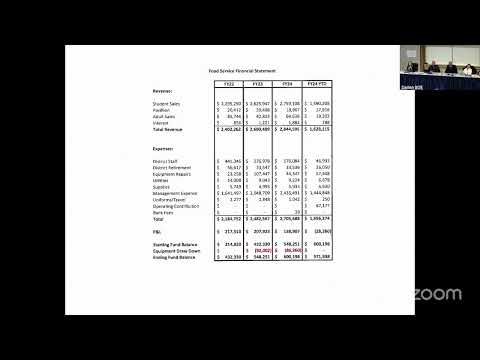
The board also discussed the food service fund. Administrators said food service typically starts the school year with negative cash flow and becomes positive in January; the fund balance has grown to about $600,000. The district had transferred some food‑service profit to offset operating costs (for example, elementary lunch monitors and facilities offsets), consistent with board direction. Finance staff described a new state option allowing districts to create non‑lapsing accounts to retain funds across years; trustees discussed whether to use a non‑lapsing food‑service account for capital purchases (for example, kitchen equipment) versus transferring funds back to the town budget as revenue.
Finance staff said the district will return with more detail on any proposed non‑lapsing account or transfers as year‑end forecasts firm up.
Ending: The board took no budget transfers in January and asked administration to return with options on food service fund management and clarification on the state ECR legislation and timing.