Get Full Government Meeting Transcripts, Videos, & Alerts Forever!
Get email alerts on the School Discipline Cellphones topic
No spam. Unsubscribe anytime.
Wyoming Area School Board adopts Policy 237 allowing Yondr phone pouches after months of debate
Summary
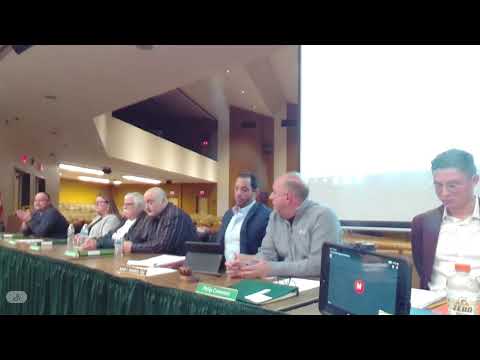
The Wyoming Area School Board on Feb. 25, 2025 approved revised Policy 237 governing student cell-phone use and endorsed use of lockable phone pouches (Yondr), following a lengthy public-comment period and board debate.
The Wyoming Area School Board on Feb. 25, 2025 approved revised Policy 237 governing student cell-phone use and endorsed purchasing a phone-management system commonly known as Yondr bags, following more than two hours of public comment and board debate.
Board members and administrators said the policy change grew out of a multi-stakeholder committee and aims to reduce instructional interruptions, social-media incidents and classroom distractions. Superintendent Dr. John Pollard told the board that the district’s PCCD grant was written to include funding for police officer staffing, a crisis worker and ‘‘contracting the yonder bags,’’ and that the board had discussed implementing the bags at the start of the next school year.
The debate split presenters and public commenters. Supporters — including teachers and administrators who served on the committee that drafted the proposal — argued that a uniform, technology-managed approach would make enforcement consistent across classrooms and free teachers to teach. Chris Eisinski, who said he served on the committee, told the board: “I was on the committee … we discussed this at length. This was the solution we came up with.”
Opponents raised safety, equity and practicality concerns. Several parents and community members warned that locking phones away could prevent students from calling 911 in an emergency, complicate accommodations for students with individualized education programs (IEPs), and drive students to leave the district for cyber school. One public speaker said the district could not afford to lose students to cyber schools, noting the district’s existing cyber-school expenditures.
Board members also disagreed about timing and enforcement. Some members argued the district should first attempt stricter enforcement of the existing phone policy and stronger classroom-level consequences before spending on a device-management system. Others said administrators and teachers had reached consensus and that Yondr-like pouches were a reasonable next step.
Board procedure and timing were repeatedly questioned during the meeting. A motion to table consideration of Policy 237 was made and failed; the board then proceeded to a roll-call vote that carried the policy. Board members and staff said implementation details — including distribution, locking stations and procedures for early dismissals, fire drills and IEP accommodations — would be finalized before rollout. Dr. Pollard said crash-bar and door projects funded through the PCCD grant and other capital work would take priority if the funds were otherwise encumbered.
Cost estimates were discussed but varied in testimony. During public comment a figure of roughly $37,000 (and a higher figure that was described as approximately $90,000) was mentioned; board members said the precise procurement cost and funding allocation would be confirmed during the implementation planning stage.
The vote followed broad public participation: teachers, parents and students spoke for and against the policy during the public-comment period and the policy discussion itself. Board members also said they had received a parent survey and other stakeholder feedback that shaped their deliberations.
The board’s adoption of Policy 237 directs administration to finalize purchasing and operational plans and return with implementation details; the policy is scheduled to begin at the start of the next school year unless the board receives new information that changes that timeline.