Get Full Government Meeting Transcripts, Videos, & Alerts Forever!
Get email alerts on the Technology Budget topic
No spam. Unsubscribe anytime.
Metuchen technology budget shows steep preliminary increase; administration seeks cuts to meet 2% cap
Summary
District technology staff presented a preliminary 2025–26 technology budget with a 6.2% increase driven by greater bandwidth, classroom phones/intercoms and rising licensing and device costs; administrators said they will pursue reductions to reach the district's 2% tax levy cap.
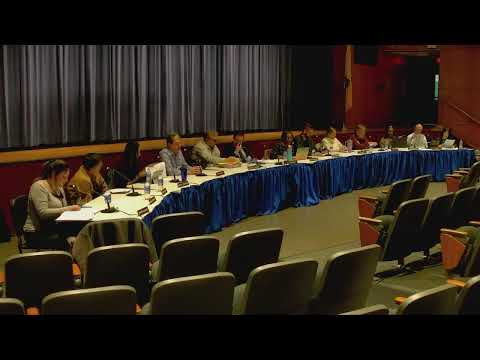
The Metuchen Board of Education heard a presentation on the district's preliminary 2025–26 technology budget Tuesday, where staff said a 6.2% increase from the current year is being refined to stay under the 2% cap on tax levy growth.
District technology staff said the increase is driven primarily by higher connectivity and subscription costs, expanded classroom telephony/intercom support tied to recent equipment additions, and growing device and licensing prices. The presenter said the district is negotiating with vendors and evaluating service changes intended to bring the number down before the March preliminary budget hearing and the April final hearing.
The budget presenter said the district upgraded its wide-area network backbone to 10 gigabit speeds and increased internet service from 1 gigabit to 5 gigabits after experiencing capacity limits. The presentation also noted a rise in incident-tracking and inventory subscription costs after adding an events module and a plan to replace two classroom management services (GoGuardian and Gaggle) with a single service called LineWise; the administration estimated the change could save about $10,700 but said staff are still confirming equivalent functionality.
Board members pressed for follow-up details. Mr. Suss asked for an evaluation comparing current classroom management tools to LineWise; the administration agreed to return with a functional comparison. Board members also questioned the district's Chromebook replacement strategy after staff said per-device lease/lease-conversion quotes rose from approximately $350 to $465 per Chromebook. The presenter noted some offset from the federal E-rate program but said overall Chromebook costs and the number of years devices remain in the replacement rotation are factors in the budget.
Another line item under scrutiny was Microsoft volume licensing. Staff explained the district negotiated a three-year agreement that resulted in higher-than-expected costs this year due to both a contract price adjustment and added licenses to create breathing room for leave replacements; staff said student licenses are not charged and server/OS coverage is included in that contract. Board members asked whether the district could separate operating-system/server licensing from productivity-suite licensing and staff said they were exploring vendor options and contract restructuring.
The presentation also attributed part of the support-cost increase to adding classroom phones, intercoms and bell systems districtwide. Staff said annual support for phone/intercom systems rose because the district added phones in roughly every classroom; the presenter described an earlier administrative phone deployment and said construction-related additions could raise the number of supported phones significantly.
Administration: "This budget handout represents an increase of 6.2%. We know that that can't stand, and we are working with our vendors to bring the cost down to under the 2% cap for this budget," the presenter said.
Board members asked for itemized follow-ups on the largest increases (Microsoft licensing, phone support, Chromebook costs) and for evidence that proposed service consolidations preserve classroom functionality. The administration committed to reporting back to finance and the full board in advance of the March preliminary budget meeting.
The district will receive state aid figures later in the week, which staff said will inform final adjustments.
Less critical details: staff noted the district maintains multiple redundancy measures (redundant server clusters, storage arrays, firewalls and internet service) and that some subscription increases were tied to added modules for ticketing/asset management.
Sources: presentation and board Q&A during the Feb. 25 Board of Education meeting.