Get Full Government Meeting Transcripts, Videos, & Alerts Forever!
Get email alerts on the School Transportation topic
No spam. Unsubscribe anytime.
Policy committee asks staff to model impacts of shortening student walk-distance eligibility for district busing
Summary
Committee asked administration to keep 4K at a half-mile walk standard for next year, and to model how changing K–4 (or K–5 in future) eligibility to one mile or 1.25 miles would affect ridership and costs; committee also reiterated 2-mile statutory eligibility for older grades and hazardous-route provisions.
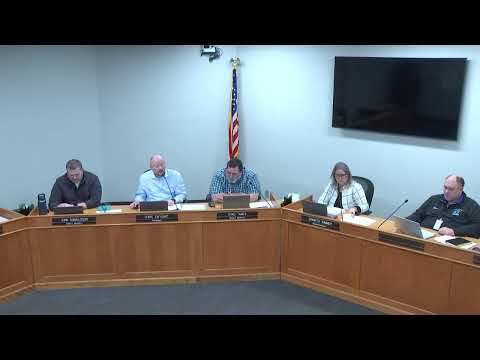
The West Bend Joint School District No. 1 policy committee directed staff on Feb. 25 to model the student and financial impacts of shortening the district’s walk-distance eligibility for bus transportation and to keep 4K eligibility at the current half-mile standard for the coming year.
Superintendent Dr. Wimmer summarized the options and said the district will ask the bus contractor to provide scenarios illustrating how many students would gain or lose eligibility and the associated cost implications. "What we would set it at a 1 or a 1.25 ... how many students would be impacted and what the cost implications are," he said.
Committee members agreed 4K students should remain at the half-mile threshold for the immediate future. For kindergarten through fourth grade, the committee asked staff to compare maintaining the current practice (one mile) with a possible 1.25-mile eligibility radius and to report the number of affected households and the estimated budget change. The superintendent said he will also model a longer-range option to standardize 4K through fifth grade at either one mile or 1.25 miles once school reconfiguration places 4K in elementary school buildings.
Members discussed practical issues such as sibling splits (where one child would remain eligible while a younger sibling would not) and the district’s current pay-to-ride options when seats are available. They also noted statutory guidance and hazardous-route rules can create exceptions. "If you live 0.25 miles from the school, but I have to cross a hazardous area, I get busing? Correct," a member asked; staff confirmed hazardous-route determinations affect eligibility regardless of measured distance.
The committee asked the administration to return with (1) the counts of students and households affected by alternatives (one mile vs. 1.25 miles for K–4 in the coming year), (2) the fiscal cost estimate for changing eligibility, and (3) modeling for future configurations (4K embedded in elementary schools and standardized tiers) so the full board can weigh equity and operational impacts before any policy change.
No immediate change to transportation policy was adopted; staff will present the modeling and recommended options to the board.