Get Full Government Meeting Transcripts, Videos, & Alerts Forever!
Get email alerts on the Facilities Rental Policy topic
No spam. Unsubscribe anytime.
Policy committee seeks simpler facility rental rules, clearer priority scheduling and cost recoupment for Silver Lining Arts Center
Summary
The committee reviewed Policy 830 (use of facilities), discussed reducing eight rental categories to fewer tiers, clearer booking priority (internal groups first), standardized custodial and staff fees, and requested staff to return with a simplified fee schedule and cost breakdowns.
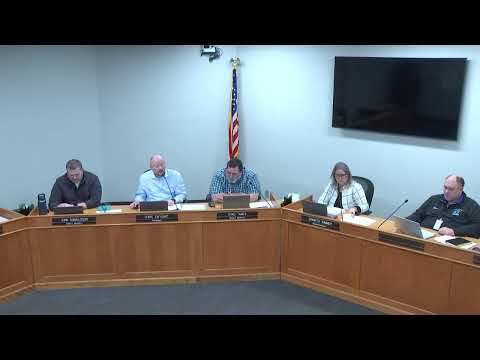
West Bend Joint School District No. 1’s policy committee reviewed Policy 830 on Feb. 25 and asked administration to return with a simplified, more transparent ruleset for facility rentals, including clearer prioritization, standardized pricing tiers and a proposal to separate custodial/staff charges from base rental fees.
Steve Harder, director of facilities, told the committee Policy 830 has eight user categories and three pricing tiers and that the district’s mix of discounts and ad-hoc practices has created confusion. "We have too many of them and they're very confusing because people know the names that they know," Harder said, and he outlined examples — such as longstanding informal first-rights to repeat annual bookings at the Silver Lining Arts Center and small add-on charges for equipment that complicate recordkeeping.
Harder said current hourly rates include a top-end for-profit rate used to cover costs: $80 an hour for the field house (which provides four courts), $130 an hour for auditorium rentals that currently includes an auditorium staff person, and $30 per two-hour block for baseball/softball fields. He said the district is the only one he surveyed that charges some outdoor fields in two-hour blocks and that some other districts separate custodial fees from facility fees and impose flat technician or pit-cover charges for auditorium operations.
Committee members generally supported reducing the number of user categories (several suggested three tiers: district groups, community/nonprofit and for-profit/nonresident) and prioritizing internal, district-sponsored activities when booking the calendar. "I like the idea of the prioritization ... tier 1 is the high school drama class ... group at the tail end ... West Bend Insurance Company ... should have last dibs," one committee member said.
Members asked staff to produce clearer cost breakdowns to justify fees (for example, the cost to run auditorium lighting, the labor hours to remove a pit cover and the custodial time to service classrooms after a weekend event) and to recommend how to handle recurring bookings (first-rights for returning annual users) and a phased booking schedule (internal groups first, then successive tiers). Harder said the district could calculate energy and custodial costs and fold those figures into straightforward package prices rather than billing many small add-ons.
The committee directed staff to: (1) reduce the number of user categories and recommend tier definitions; (2) propose a calendar priority and recurring-booking policy for the Silver Lining Arts Center (including a reasonable legacy window for repeat users); (3) separate custodial/staff charges from base rental fees and provide standard package pricing with the cost components shown; and (4) return in a few months with a simplified administrative rule and fee schedule for board first reading.
No fee increases or formal policy changes were adopted at the committee meeting; staff will return with a draft policy and cost model for board consideration.