Get Full Government Meeting Transcripts, Videos, & Alerts Forever!
Get email alerts on the Open Government topic
No spam. Unsubscribe anytime.
Bountiful council receives Open and Public Meetings Act training; review covers closed meetings, notice and records
Summary
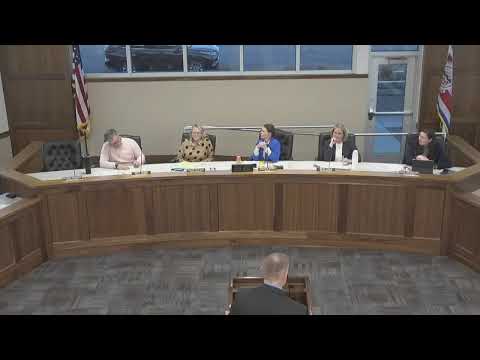
At a Feb. 25 work session, the Bountiful City Council watched a State Auditor—s Office training video and heard a review from the city attorney on the Open and Public Meetings Act, including when a governing body may close a meeting, notice and minutes requirements, and recordkeeping timetables.
Bountiful City Council members received their annual Open and Public Meetings Act training during a Feb. 25, 2025 work session, beginning with a State Auditor—s Office video and a follow-up review by the council—s attorney.
The State Auditor—s Office video introduced the Open and Public Meetings Act as "the state law that ensures government actions and deliberations are openly conducted," and the session emphasized the practical requirements the law places on local governing bodies, the city attorney said.
The training focused on when meetings may be closed, voting thresholds to close a meeting, notice and agenda requirements for open meetings, and the recordkeeping duties for minutes and recordings. The video and the attorney explained that a governing body may close a meeting only for specified reasons such as discussions of a person's character or competence, litigation strategy, certain real property transactions, and matters implicating security or protected procurement information.
Why it matters: compliance with the Open and Public Meetings Act affects whether council deliberations are public and whether council actions can be legally defended. The session provided council members with concrete guidance intended to reduce procedural risk and ensure that minutes and recordings meet statutory requirements.
Most important details
- Reasons to close a meeting: The training listed the statutory exceptions that permit closed meetings, including character/competence/health of an individual, collective bargaining, litigation, certain real property (including water rights) matters, security deployment, criminal investigations and specified procurement-related protected information. A closed meeting requires proper notice, a quorum and a vote of two-thirds of the governing body present to close the meeting.
- Two-thirds threshold explained: The training offered a numerical example: if five members are present, three yes votes equal 60%, which is below the required two-thirds (66.7%); four yes votes would be required in that scenario.
- Notice and agenda rules: Regular open meetings require at least 24 hours' notice and an agenda that lists each topic under separate items. A governing body may not take final action on a topic that was not reasonably specified on the posted agenda. If a new topic arises from public comment, the body may discuss it but cannot take final action at that meeting.
- Minutes and recordings: Written minutes for open meetings must include date, time and place, names of members present and absent, the substance of all matters proposed, names and substance of public comments, and a record of each member—s vote. A complete, unedited audio recording of open portions must be kept and labeled with date, time and place. Pending minutes should be clearly marked as draft and made available within 30 days; approved minutes and public materials must be posted within three business days of approval. Audio recordings of open meetings must be made available for listening within three business days after the meeting.
Council response and practice notes
Council members and the attorney described the training as helpful and noted that the city typically does not meet in closed session but may need to on occasion. The city attorney moved during the session "to go to closed session for one of three reasons: to discuss litigation, the character or competency of an individual, or a pending real estate transaction," though the transcript does not record the vote outcome.
The training also highlighted administrative details: entities that hold regularly scheduled meetings must post an annual schedule, notice should be posted on the entity—s primary website and Utah—s public notice website in accordance with Utah Code 63G-30-102, and records officers typically handle posting.
Ending
Council members closed the training portion by thanking presenters and confirming they would follow the guidance closely. The session then transitioned to a legislative update with state representatives in attendance.