Get Full Government Meeting Transcripts, Videos, & Alerts Forever!
Get email alerts on the Parking And Access topic
No spam. Unsubscribe anytime.
Council approves changes allowing permeable parking in single‑family zones, adds clarified removal notice for unused drive approaches
Summary
The council adopted a city‑initiated amendment (Ordinance 2025‑O6) that permits permeable parking surfaces in single‑family lots under specified conditions and adds a requirement to remove abandoned driveway approaches, with clarified timing language after council discussion.
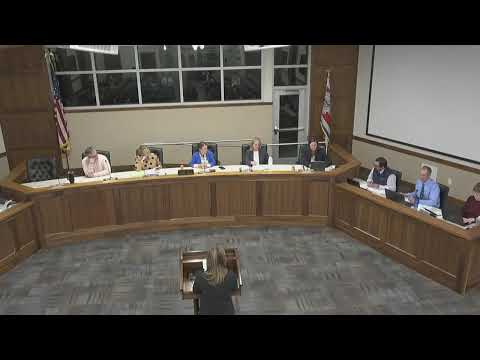
The Bountiful City Council on Feb. 25 adopted a city‑initiated land‑use text amendment governing permeable parking surfaces and curb‑cut/driveway access in single‑family residential zones (Ordinance 2025‑O6).
Planning staff member Francisco Astorga told the council the ordinance incorporates direction from prior work sessions and the planning commission and adds five related code changes affecting permeable parking, landscaping buffers, site‑triangle rules and access requirements. Astorga said the code includes a diagram showing acceptable locations for gravel or other permeable parking areas and requires separation from landscaped areas; staff also incorporated language from the city engineer defining acceptable rock sizes.
A significant portion of council discussion focused on the ordinance's treatment of existing drive approaches (curb cuts) that are no longer in use. The draft had required owners to remove and replace an unused access with standard curb, park strip and sidewalk within one year. Council members questioned whether the one‑year time frame was too short and whether the city would unduly burden homeowners whose access areas had been dormant but might be reused.
Lloyd (planning/engineering staff) explained the provision was intended to address drive approaches that clearly have not been used for a long time and can attract adverse impacts like vegetation damage or improper parking. Lloyd said the one‑year term was intended to give property owners time to make repairs and avoid an immediate, short notice requirement.
Council discussion centered on whether the one‑year period should be kept, altered, or clarified. At least one council member said they would prefer to remove the one‑year timeframe; others favored retaining it but clarifying how notice is provided. City staff and council agreed to clarify that removal would be required "within one year after notice from the city engineer that the access has been determined to be abandoned," language the council asked staff and the city attorney to formalize. The council also discussed how the city would determine abandonment, with staff noting aerial photography and permit review would inform such determinations.
Councilmember motioned to adopt the ordinance with the clarified language; the motion passed on a voice vote with no recorded opposition.
The adopted code also clarifies the definition of "paving" and how permeable pavers, permeable concrete or other substitutes may be evaluated by the city engineer based on their ability to pass water, giving staff discretion to approve reasonable substitutes on a case‑by‑case basis.
Planning staff said the changes implement a model the council reviewed at prior meetings and aim to allow more flexible permeable parking while protecting landscaping and ensuring safe access.