Get Full Government Meeting Transcripts, Videos, & Alerts Forever!
Get email alerts on the Cemetery Master Plan topic
No spam. Unsubscribe anytime.
Waynesville council approves Green Hill Cemetery master plan, authorizes phased repairs and new maintenance facilities
Summary
The Town of Waynesville approved a multi-phase master plan for Green Hill Cemetery that outlines retaining-wall repairs, stormwater fixes, monument conservation, a proposed maintenance office and phased funding steps, with the council voting to accept the plan as presented.
The Town of Waynesville approved a master plan for Green Hill (Greenhill) Cemetery that lays out short-, medium- and long-term repairs and facility improvements, including retaining-wall assessments, stormwater fixes, monument conservation and a proposed maintenance office to serve families on site. Councilmember Anson moved to approve the plan; Councilmember John seconded and the motion carried.
The plan, produced by Wendy Fry and Associates after an RFQ and site visits in 2024, identifies decaying rock walls — some approaching 100 years old — clogged drain outlets and localized erosion. The proposal zones the 26-acre cemetery with a historical section at the top, veteran sections in the center and areas designated for new full-depth burials. It also recommends a meditation court, improved walkways, a veteran memorial area and a 30-by-50-foot maintenance shed plus a 30-by-50-foot office for family services.
Why this matters: Council members and cemetery volunteers said the cemetery is both historic and actively used, with the plan intended to protect monuments, reduce erosion and improve visitor safety. Edwin Fish, chairman of the cemetery committee, and staff described the plan as the product of committee input, public meetings and consultant analysis.
Key details and next steps noted by staff include a monument and marker inventory, a retaining-wall assessment with engineering where walls exceed five to six feet, a stormwater assessment, a volunteer-led headstone cleaning program and an updated tree inventory. Staff proposed using a portion of perpetual-care fund proceeds (estimated at about $25,000 per year in receipts) to finance smaller projects initially; the council was told the use of those funds would be a council decision.
Council discussion also touched on staffing needs for cemetery maintenance. The presentation said staff currently meet families for paperwork at an off-site Public Works location and that an on-site office would improve service. The public works director and council noted that additional staffing requests would be considered in future budgets; no new position was included in the current budget.
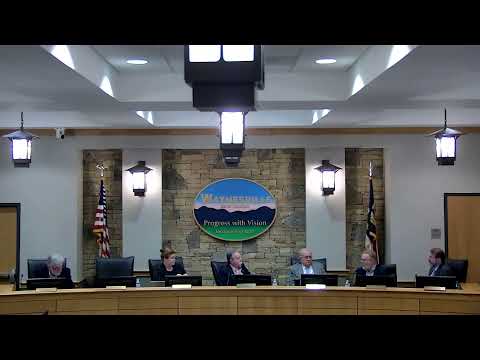
The council recorded the motion to approve the plan and directed staff to return with implementation steps, funding options and phasing details. The motion passed on a voice vote.
The plan recommends phased work: short-term activities (monument inventory, targeted wall repairs, public-art and meditation court planning), medium-term work (maintenance office construction and further retaining-wall repairs) and long-term work (road work and cul-de-sacs, additional burial zones and expanded veteran sections). Staff described tentative timelines tied to available funding and grant opportunities.
Provenance: The cemetery master plan presentation began during the “Presentations” portion of the meeting and concluded with the council vote to approve the plan.