Get Full Government Meeting Transcripts, Videos, & Alerts Forever!
Get email alerts on the Animal Welfare topic
No spam. Unsubscribe anytime.
Broward County rolls out 'Tag for Life' pet license and microchip push in Pompano Beach
Summary
Broward County Animal Care director Doug Brightwell briefed the Pompano Beach City Commission on a new lifetime pet‑tag program and a reduced fee schedule tied to microchip registration starting May 1, 2025.
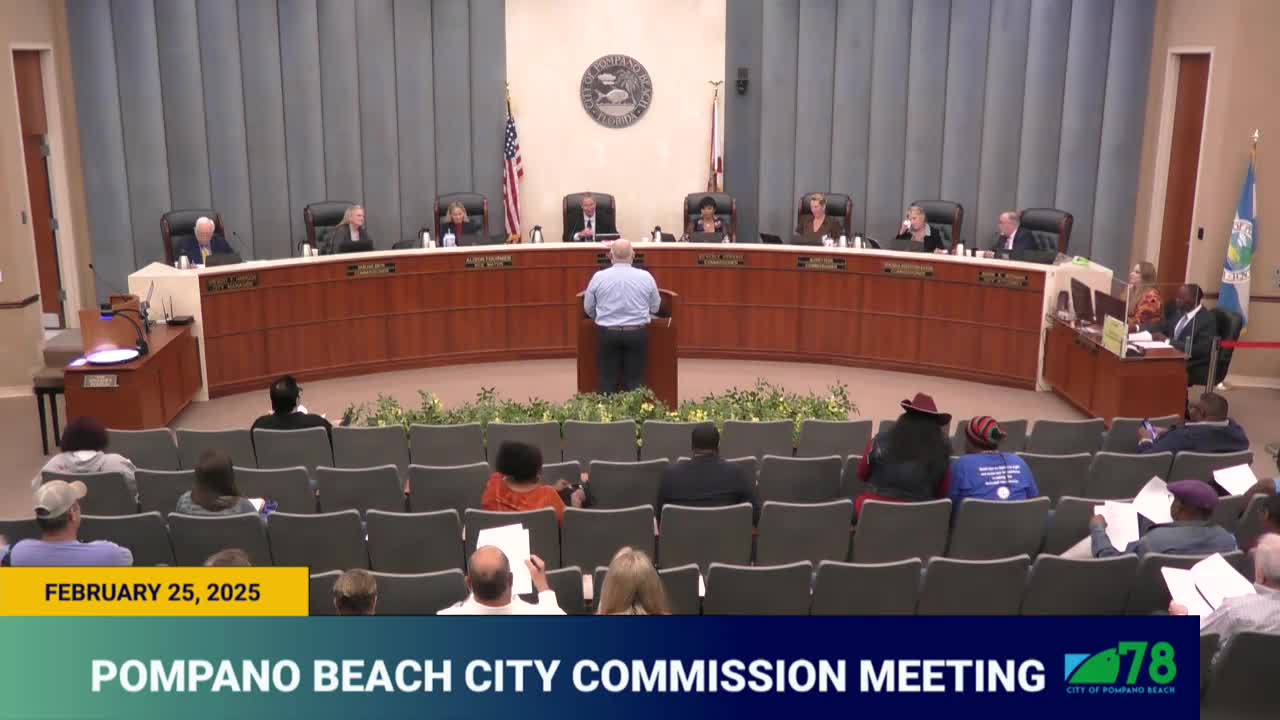
POMPANO BEACH, Fla. — Broward County Animal Care announced a switch to a lifetime pet tag program and a simplified fee structure tied to microchipping during a Feb. 25 presentation to the Pompano Beach City Commission.
Doug Brightwell, director of Broward County Animal Care, said the county will transition away from annual replacement tags. Starting in 2025 an owner’s pet will keep the same tag number for life and owners will simply submit updated rabies information each year for license renewal. Brightwell said the change aims to simplify renewals and reduce lost‑tag confusion.
Brightwell said another change approved by the county will take effect May 1, 2025: the annual licensing fee will be $25 if a pet is microchipped and the chip is registered with Broward County Animal Care, and $55 if a pet is not microchipped. County staff plan free microchip clinics and said microchip registration helps reunite lost animals more quickly.
Brightwell also reminded residents that Broward County Animal Care runs adoption and wellness clinics and will expand free clinic locations, with at least one event in Pompano Beach anticipated before summer. The director urged pet owners to take advantage of free microchip clinics and to keep rabies and licensing records current.
No formal action by the commission was required; the presentation was informational. Officials on the dais thanked county staff and said they expected an enforcement and public‑information rollout to follow.
Why it matters: The fee change and lifetime tag reduce barriers to annual licensing and may shorten shelter stays by improving owner reunification through microchip registration.