Get Full Government Meeting Transcripts, Videos, & Alerts Forever!
Get email alerts on the Alamo Visitor Center topic
No spam. Unsubscribe anytime.
Alamo Trust reports construction progress; commissioners press for community outreach and documentation
Summary
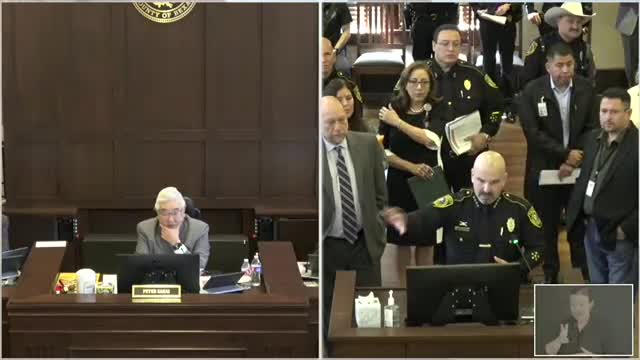
Alamo Trust Inc. told the Bexar County Commissioners Court on Feb. 25 that construction of the new Alamo Visitor Center and Museum is underway and remains scheduled to finish in late 2027, while commissioners pressed the Trust for clearer documentation of community outreach, local contracting and how people of color’s perspectives were incorporated into exhibit planning.
Alamo Trust Inc. gave Bexar County Commissioners an update on construction and exhibit planning for the Alamo Visitor Center and Museum and fielded detailed questions about community outreach, exhibit content and local contracting. Trust executive director Kate Rogers and staff said construction began October 1, 2024, that galleries and exhibit fabrication were in final design and that the team remains on schedule for completion in late 2027.
The Trust showed renderings of the new lobby, a glass interpretation of the Alamo wall, bronze sculptures representing people tied to the site’s 300‑year history, a civil rights gallery in the Woolworth Building and a 4‑D theater planned to cover the full span of Alamo history. Rogers said lobby and many exterior exhibits will remain free, and that an RFID personalization experience is planned for optional inside exhibits.
Commissioners sought specifics about how Trust planning had incorporated perspectives of people of color and whether committee participants felt their views were heard. Commissioner Clay Flores said some community members reported feeling “unsafe or silenced” in planning meetings and asked the Trust to document recent steps taken to engage and incorporate feedback. Rogers described a commissioned white paper on slavery in the Texas Revolution, working sessions with the Museum Planning Committee to revise contested design elements, and an internal facilitator-driven process that led to a design change she described as “an elegant solution.” She agreed to provide a written summary of outreach and meeting facilitation steps and of who had participated.
Commissioners also pressed the Trust on local contracting and hiring. Rogers said the project requires a half‑billion‑dollar construction program overall, with Bexar County’s $25 million previously helping the Trust progress from design to construction. She said construction contracts include arrangements to monitor and report HUB (Historically Underutilized Business) participation and highlighted that several project components used local firms; she agreed to provide specific percentages of local and HUB participation. County staff asked the Trust to deliver a written follow‑up showing how the Trust intends to use local firms for construction and operations subcontracting.
Other questions from commissioners and county staff covered state funding (Rogers said the Texas Legislature allocated roughly $400 million to Alamo grounds improvements in the last session), the project’s economic impact and oversight of interpretive narratives. Commissioners emphasized the county’s expectation that the Trust continue to incorporate committee input and maintain transparent documentation of outreach to communities of color.
The presentation concluded with no formal vote; commissioners requested follow‑up written materials from the Trust on community engagement, HUB/local participation and the final decision process for exhibits. Rogers said the Trust would deliver those materials and return as needed to answer questions from the court.