Get Full Government Meeting Transcripts, Videos, & Alerts Forever!
Get email alerts on the Middle East Peace topic
No spam. Unsubscribe anytime.
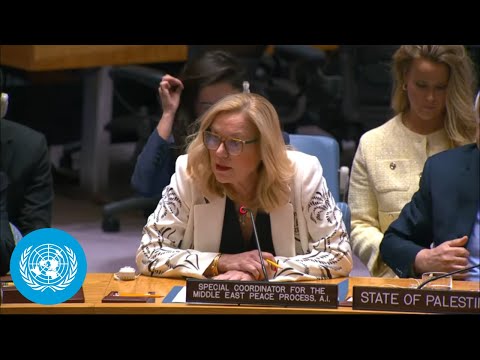
UN special coordinator urges full implementation of Gaza ceasefire, calls for €53 billion reconstruction plan
Summary
The United Nations special coordinator for the Middle East peace process (ad interim) told the Security Council that the first phase of the Gaza ceasefire has provided relief but must be fully implemented, all hostages released and a coordinated international reconstruction effort organized.
The United Nations special coordinator for the Middle East peace process (ad interim) told the Security Council that the first phase of the Gaza ceasefire has provided much‑needed relief but must be fully implemented, all hostages released and a large international reconstruction effort organized.
“The resumption of hostilities must be avoided at all cost,” the special coordinator said, urging both sides to “fully honour their commitments to the ceasefire deal” and to conclude negotiations on a second phase. The speaker welcomed the release of 34 hostages in the first phase and said that 1,135 Palestinian prisoners and detainees have been released so far under the deal.
The coordinator described the humanitarian situation in Gaza as deeply damaging to dignity and survival after “15 months of deprivation of basic human necessities,” and said that medical evacuations through the Rafah crossing began on Feb. 1 under the ceasefire terms. He also called for access by the International Committee of the Red Cross to hostages while in captivity.
Turning to reconstruction, the coordinator said the World Bank, the European Union and the United Nations have produced an interim damage and needs assessment estimating initial reconstruction needs at €53,000,000,000 and said Arab states are leading plans for rebuilding, with Egypt preparing to host a Gaza reconstruction conference. “The UN is ready to support reconstruction efforts,” he said, adding that Palestinians must be able to resume their lives without forced displacement.
The statement also raised concerns about intensified violence in the West Bank, naming Jenin, Tubas and Tulkarem governorates as especially affected and noting reports of casualties, displacement and restrictions on movement. The coordinator said Israeli forces have used air strikes and heavy weaponry while militants have used improvised explosive devices and shootings, and that the Israel Defense Forces increased troop presence in the West Bank after three bombs detonated on empty buses near Tel Aviv.
He expressed alarm at reported killings, including of a pregnant woman and young children, and said those incidents “must be thoroughly investigated and those responsible held to account.” The coordinator also criticized accelerated demolitions and evictions, ongoing settlement activity and state land declarations that, he said, impede Palestinian land use.
The coordinator warned that recent developments, including continued settlement advances, “present an existential threat to the prospect of a viable and independent Palestinian state, and thereby the 2‑state solution.” He also noted an Israeli law banning UNRWA from operating in Israel and occupied East Jerusalem that “took effect on 01/30/2025,” and said UNRWA’s work “remains essential and must be allowed to continue unimpeded.”
On Palestinian governance, the coordinator said the Palestinian Authority is implementing agreed reforms in fiscal and public finance policy, governance and rule of law, and cited a February decree cancelling financial payments to families of Palestinians killed or imprisoned following attacks on Israelis as “an important step” that should be fully implemented.
He also addressed regional issues, saying Lebanon’s recent presidential election and government formation create a chance to strengthen state institutions and calling on Lebanon and Israel to implement Security Council Resolution 1701. He flagged violations of the 1974 disengagement of forces agreement in southwest Syria and urged parties there to uphold their obligations.
The coordinator listed four specific requests to the Council and member states: continued support for full realization of the ceasefire, urgent de‑escalation in the West Bank, continued international support for Palestinian Authority reform and resumption of responsibilities in Gaza, and political and financial backing for Gaza’s recovery and reconstruction. “Peace in the Middle East is possible,” he said, adding that a future must include a safe Israel alongside a viable and independent Palestinian state based on UN resolutions, international law and prior agreements.
The United Nations special coordinator concluded by saying the UN will “continue to play its role in pursuit of lasting peace.”