Get Full Government Meeting Transcripts, Videos, & Alerts Forever!
Get email alerts on the State Budget Taxation topic
No spam. Unsubscribe anytime.
House tax committee votes 12-11 to send surplus-refund constitutional amendment (HF4) to rules
Summary
The Minnesota House Tax Committee approved sending House File 4 — a proposed constitutional amendment to return general-fund surpluses exceeding 105% of projected expenditures to taxpayers — to the rules committee after a 12-11 roll call. Members debated fiscal risks, implementation questions and which taxpayers would be eligible.
The Minnesota House Tax Committee on Feb. 25 voted 12-11 to send House File 4, a proposed constitutional amendment to return surplus dollars to taxpayers, to the rules committee for further consideration. The committee recorded 12 ayes and 11 nays on a roll call requested before the vote.
House File 4, authored by Representative Johnson, would create a mechanism to refund or provide relief when general-fund revenues exceed 105% of projected expenditures, directing surplus funds to an account for refunds “whether through property tax refunds or relief,” Johnson said during the committee presentation. The committee approved moving the measure to rules and legislative administration; committee leaders said it would later need to go to ways and means.
Supporters told the committee voters want a vehicle to return large surpluses to taxpayers. Representative Johnson said the bill responds to door‑stop feedback from constituents and “is to set in place a constitutional amendment…that if there is a surplus, that the money is set up and there is a mechanism to give that money back to the taxpayers.”
Opponents cautioned that the amendment could reduce flexibility to respond to economic shocks and create budgetary risk. Chair Gomez characterized the proposal as limiting the state’s ability to respond to crises, saying in committee debate, “This is a really dangerous piece of legislation…this is not the way that we make policy through locking ourselves in in the Constitution,” and urged a no vote.
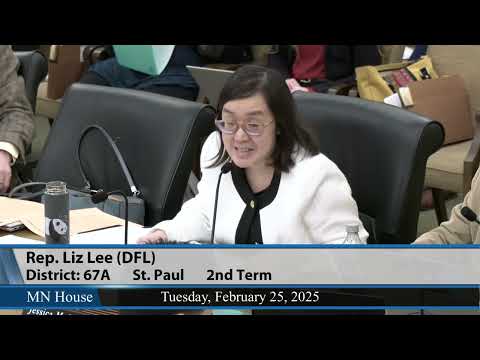
Committee members pressed technical and implementation questions. Representative Lee flagged the fiscal note and asked which agency would issue refunds, noting the bill text does not direct any agency to administer refunds. Ms. Templin, fiscal staff, confirmed the fiscal note in members’ packets is completed by three agencies but said that if the constitutional amendment passed, enabling legislation would be required to specify administration. Ms. Templin told the committee, “it is a completed fiscal note, by 3 agencies.”
Members also discussed how existing budget-reserve structures and prior set‑asides would interact with HF4. Representative Malcolmson asked whether funds that had been set aside in a prior session — about $3.7 billion — could be retained to cover a projected deficit or instead would be required to be refunded under HF4. Nonpartisan staff explained HF4 defines surplus as projected revenues exceeding 105% of projected expenditures; only the portion within that 5% window would be eligible for the transfers described in the bill. Staff noted a second calculation tied to the November forecast could also transfer some amounts into the budget reserve, but transfers under House File 4 would operate within the defined 5% window.
Other technical points raised included which revenue streams and taxpayers would qualify. Representative Norris and others observed that the bill, as drafted and discussed, would make property taxpayers and income taxpayers eligible for refunds but would not return funds based on sales tax collections; Representative Norris noted sales tax comprises roughly one-quarter of state tax collections and therefore many low-income renters and other residents who pay primarily sales taxes might not receive refunds under the bill. Representative Norris said that many residents in his district who rely on Social Security or have low incomes would not qualify because they pay little or no income tax and do not directly receive property-tax bills.
Committee debate also included potential credit‑rating consequences. Representative Joaquin warned that rating agencies may view constitutional limitations on revenue flexibility unfavorably and could downgrade the state’s AAA ratings if the state loses flexibility to respond to downturns.
After discussion and a requested roll call, the committee approved the motion to send HF4 to rules and legislative administration as amended, by a 12‑11 roll call. The chair announced that following the rules committee and the normal legislative process, the bill would still need to go to ways and means.
Votes at a glance: On Feb. 25 the House Tax Committee recorded 12 ayes and 11 nays on the motion to send House File 4 to rules and legislative administration. The committee clerk read a roll call (aye/no) for each member present; the chair announced “12 ayes and 11 nays” and declared the motion passed.
What's next: HF4 will proceed to the House rules committee and then follow the legislature’s regular committee path, with committee leaders noting it would ultimately need consideration in ways and means and on the House floor if advanced by the rules committee.