Get Full Government Meeting Transcripts, Videos, & Alerts Forever!
Get email alerts on the Paid Family Medical Leave topic
No spam. Unsubscribe anytime.
Minnesota officials say paid family and medical leave ready to launch Jan. 1, 2026; questions remain on implementation and costs
Summary
The House Workforce Committee was briefed Feb. 24 that Minnesota's paid family and medical leave program is on track for a Jan. 1, 2026 launch, with the department confirming a preliminary premium rate of 0.88% for 2026.
The House Workforce, Labor and Economic Development Finance and Policy Committee heard detailed implementation questions Feb. 24 as department officials briefed members on Minnesota's paid family and medical leave program and its operational readiness for a Jan. 1, 2026 start.
Why it matters: The program will create a statewide payroll-based premium and a public claims system intended to provide wage replacement for bonding, medical and safety leaves. Committee members pressed the Department of Employment and Economic Development on how much employers and workers will pay, how the department will handle early claim volume, and how the program will treat special cases such as college work-study students and hourly programs that route earnings to non-profits.
DEED officials said the department confirmed a preliminary premium rate of 0.88% for 2026 and that small employers (30 or fewer employees) are eligible for a reduced rate. "The department did confirm on Friday that the premium rate for . . . in 2026 will be point 88%," an assistant commissioner told the committee. DEED said the rate can be split 50/50 between employers and employees, and that for small employers the employer portion effectively lowers the overall premium rate.
On likely financial impacts, Representative Peter Johnson ran the department'provided calculator numbers for an average Minnesota wage (about $67,000) and said that equates to roughly $5.67 per week for a typical worker at the preliminary premium. DEED officials said employers can use an online premium-rate calculator to estimate exact dollar impacts because final premiums will depend on submitted wage detail.
Officials also discussed operational readiness. The department said it is hiring a operations team of roughly 400 staff — call center, claims adjudication and product staff — and expects higher volume at launch. Director Norfleet told the committee the department expects a temporary bump in claims in January 2026 as new parents who had children in 2025 apply, then settle into an average of about 10,000 approvals a month.
Lawmakers raised several implementation concerns: whether students on work-study would meet eligibility, how the program will treat hourly-based payments that are routed to charities or third parties (and whether those payments qualify as wages), how multiple family members can take leave to care for the same individual, and how a broad "family" definition will be validated. On work-study and similar arrangements, DEED said eligibility depends on whether the payments meet the statute'defined wage thresholds and that individual circumstances may require follow-up.
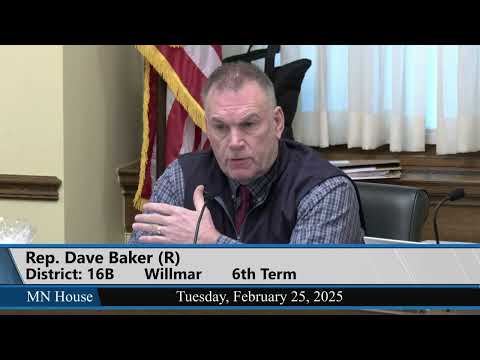
Committee members repeatedly cited the state's experience with unemployment insurance during the COVID-19 pandemic as a cautionary example. Representative Wayne Johnson told officials that if the program does not have adequate staffing, "it'll be just send out the money to whoever requests it, and there'll be no way to actually see if people should be receiving it." DEED responded that the agency has been recruiting and that contingency plans exist to minimize disruption.
DEED described several program flexibilities and assistance mechanisms: a reduced premium rate for small employers, small employer assistance grants to help with temporary backfill when an employee is on leave, an exemptions process for employer plans that are as generous as the state program (allowing private plans to remain primary), and a seasonal-hospitality exemption process. The department said it will publish an exemptions process this spring.
On collective bargaining, DEED reiterated that the law allows employers to charge up to 50% of the premium to employees but does not prescribe how local contracts or collective-bargaining agreements will treat premium splits; those are subject to local negotiations. DEED officials said they have conducted outreach with school-district associations and negotiators to inform districts.
What's next: Committee members indicated more questions and oversight will continue. Several lawmakers said they support the program but want to keep examining staffing, data-sharing with existing programs and details affecting small employers and school districts. The committee moved on after the briefing to other agenda items; no committee vote to delay the program was taken during this session.
Ending: DEED officials emphasized they will continue outreach and publish tools and guidance, while lawmakers signaled they will monitor early operations closely and consider legislative adjustments if necessary.