Get Full Government Meeting Transcripts, Videos, & Alerts Forever!
Get email alerts on the K 12 Tutoring topic
No spam. Unsubscribe anytime.
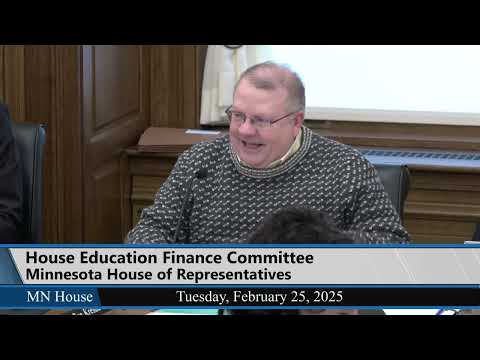
Committee lays over bill to offer advance payments and curb fraud in K‑12 tutoring tax credit
Summary
Representatives discussed House File 779, which would allow low‑income families to receive an advance of up to half a K‑12 education tax credit and end an assignment program that has been used in recent fraud schemes; committee laid the bill over for further work and a fiscal note.
The Education Finance Committee laid over House File 779 for possible inclusion in an omnibus bill after testimony and member questions about fraud uncovered in the K‑12 tax credit program, program design and operational details.
Chair Krisha introduced the bill as a response to reporting that families were recruited into arrangements where providers billed the K‑12 education tax credit for tutoring that was substandard or never delivered. The bill would give qualifying lower‑income families the option of taking an advance payment equal to up to half of the eligible education tax credit and would end the K‑12 assignment program that third parties currently use to monetize credits. The sponsor said the bill could include an electronic benefits transfer (EBT) card model for distributing funds and acknowledged the proposal will likely require a fiscal note.
Public testimony included Afshir Omar, who described several cases reported in recent media coverage and urged cutting out intermediaries so families receive money directly. Matt Shaver, senior policy director at Ed Allies, urged higher quality standards for any tutoring paid through a tax program. Shaver recommended state policy require evidence‑based, high‑dosage tutoring delivered with progress reporting and reasonable caseloads per tutor and said the burden of proof for program quality should rest on providers rather than families who risk being audited by the Department of Revenue.
Committee members asked nonpartisan staff and the sponsor for technical details including the number of assigned credits and fiscal impact. House research staff reported about 287 assigned credits since 2021 in Department of Revenue data; the staffer said the dataset did not include the dollar total represented by those assignments. Members discussed whether the state should instead scale evidence‑based tutoring through K‑12 grants or after‑school programs; they also raised whether an advance payment would be treated as income for other public benefit programs such as SNAP. Nonpartisan staff said the child‑tax credit advance precedent raises similar issues and the SNAP treatment can differ depending on program design.
Chair Krisha and members agreed to lay the bill over so the sponsor and staff can pursue technical fixes, fiscal analysis and stakeholder work on certification, provider standards, safe‑harbor design and eligibility language.