Get Full Government Meeting Transcripts, Videos, & Alerts Forever!
Get email alerts on the Long Term Care Border Crisis topic
No spam. Unsubscribe anytime.
Territorial leaders describe ‘border’ patient backlog, Medicaid uncertainty and nursing‑home shortfall
Summary
Department of Human Services and hospital executives told the legislature on Feb. 25 that hospitals are strained by patients who remain hospitalized after acute care is no longer needed, Medicaid enrollment is falling after PHE unwinding, and local long‑term care capacity is far short of demand.
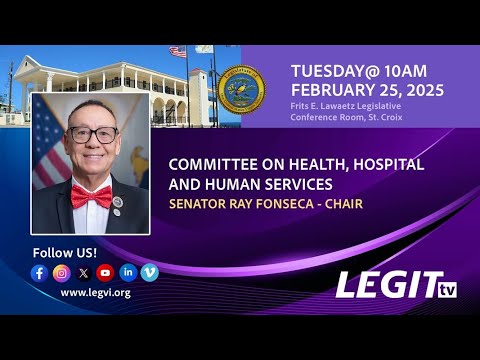
St. Croix, U.S. Virgin Islands — Testimony before the Legislature’s Committee on Health, Hospitals and Human Services on Feb. 25 laid out a series of interlocking problems that officials say are constraining care across the territory: hundreds of millions in unpaid bills and underfunding for hospitals, a shrinking Medicaid caseload following the end of pandemic protections, and a shortage of nursing‑home and assisted‑living capacity that leaves dozens of patients “boarded” in hospitals.
“The broader border crisis, which has placed unprecedented pressure on our hospitals, long term care facilities, and social services,” said Avril Lee George, commissioner of the Virgin Islands Department of Human Services, as she described how discharged patients who have no safe placement remain in hospital beds. “On average, between 7 and 10 individuals are classified as borders at any given time,” she told the committee, and later testified that DHS maintains waiting lists for nursing‑home placements.
Why it matters: Hospital leaders said boarded patients reduce bed availability for urgent cases, drive up uncompensated care costs and slow emergency‑department throughput. Hospital executives and DHS urged the Legislature to prioritize short‑term placements, while pursuing longer‑term investments in certified nursing facilities and community‑based services.
What officials told lawmakers
Medicaid and enrollment: Gary Smith, director of Medicaid at DHS, and Commissioner George both described steep enrollment changes connected to the end of the public‑health emergency and recertification processes. “As of 12/29/2024, Medicaid enrollment in The Virgin Islands stands at 21,071 members,” George said. Smith highlighted that the territory now has an 83% federal medical assistance percentage (FMAP) but that the program’s long‑term sustainability is uncertain as Congress debates territory funding; Smith told the committee the federal share for the territory this fiscal year is about $139,450,000.
Presumptive eligibility has fallen sharply, agency staff said. DHS and providers reported large drops in immediate enrollments at key clinics and hospitals, raising concerns about delayed treatment and higher uncompensated care.
The “borders” problem and long‑term care shortage: DHS and hospital officials gave counts they said reflected the backlog during the hearing: Schneider Regional Medical Center (St. Croix) reported caring for 13 boarded patients; Juan F. Louis Hospital (St. Croix) reported nine disposition patients at one point, with small variations during the hearing. Christopher Finch, secretary of the Territorial Hospital and Health Facilities Corporation, summarized the problem: “Borders are human beings… who no longer have the ability to care for themselves and do not have sufficient family or friends to provide the care they need at home,” and who therefore remain in hospital beds once acute care ends.
Capacity numbers provided in testimony include current Queen Louise Home capacity of 17 residents and Herbert Gregg capacity of 26; DHS said it is pursuing construction of new CMS‑certified nursing facilities but that new facilities will not be completed for several years. DHS officials said that temporarily expanding Herbert Gregg by 11 residents would require hiring 13 additional staff and cost roughly $1.2 million a year.
Off‑island placements: DHS reported that several residents are already placed off island under contract — five in Puerto Rico’s Casa de Salud and 10 at a Florida nursing home — and said these placements are expensive (testimony cited annual ranges per person when off‑island skilled nursing is used).
Hospital finances, staffing and capital needs: Hospital CEOs described acute financial stress. Tina Kumis Young, CEO of Schneider Regional Medical Center, told the committee that SRMC’s accounts payable had grown to about $38 million and that the hospital operates at times with only two days of cash on hand because reimbursements, uncompensated care and aged facility costs outstrip allotments. “Uncompensated care places a significant burden on SRMC,” she said, noting a FY25 GVI appropriation that the hospital said fell well short of statutory uncompensated‑care levels.
Darlene Carty Baptiste, CEO of Juan F. Louis Hospital, said JFL’s accounts payable was about $19.9 million and described similar pressures: staffing shortages, equipment and facility maintenance needs, and the patient‑disposition backlog. Both CEOs described efforts to stabilize nursing and allied‑health staffing — JFL reported hiring 22 full‑time RNs through a residency partnership with the University of the Virgin Islands — but said recruitment and retention hinge on competitive pay and steady revenue.
Digital records and billing: Hospital leaders and the territorial redevelopment team urged investment in a single, enterprise electronic medical record (EMR) and revenue‑cycle overhaul. Officials estimated an enterprise EMR for both hospitals would cost on the order of $10 million to implement and then an ongoing subscription; they argued such an investment would raise collections, reduce denials and speed claims. Schneider’s CEO said stronger billing and IT systems had already improved collections in 2023 and 2024, and that more investment would further reduce dependence on allotments.
Capital projects and timelines: Territorial redevelopment officials reported progress on major rebuilds funded through disaster recovery: the Charlotte Kimmelman Cancer Institute construction is on track for completion in late 2025, and DHS testified about planned relocation and rehabilitation timelines for Queen Louise (temporary relocation to Palms Court Harborview was planned for March 31, 2025, with a target reopening of the rehabilitated facility in February 2026). Herbert Gregg redesign and replacement work is ongoing and tied to FEMA/Rebuild USVI schedules; DHS said a fully new CMS‑certified nursing facility is expected in several years.
What lawmakers pressed for
Legislators repeatedly pressed for more precise lists of waiting and boarded patients, confirmation of projected costs and staffing plans for proposed expansions, and a clear accounting of Medicaid match obligations. Multiple senators urged shared purchasing, tighter procurement and explicit plans to invest in an EMR and revenue cycle to boost hospital receipts before requesting larger allotments.
Follow‑up and next steps
Committee members asked DHS and the hospitals for follow‑up documents: up‑to‑date counts of boarded patients and waiting lists by island, a breakdown of locum and staffing costs, updated accounts‑payable ledgers, and cost estimates and vendor proposals for an enterprise EMR. The committee scheduled ongoing oversight and invited hospital leaders to return with those documents; the hearing record notes a next committee meeting scheduled for March 25.
Ending
DHS and hospital leaders asked the Legislature for short‑term funds to place boarded patients while continuing to push for federal Medicaid protections and long‑term investments in nursing‑home capacity. As Commissioner George put it in testimony, the territory “must be vigilant, adaptable and unified in advocating for stable and equitable funding” to prevent the island health system and patients from bearing the brunt of policy changes outside local control.
(Committee hearing transcript; statements and counts in this article are from the testimony of Avril Lee George, Gary Smith, Tina K. Cumis Young, Darlene Carty Baptiste, Christopher Finch and Daryl Smalls at the Committee on Health, Hospitals and Human Services hearing, Feb. 25, 2025.)