Get Full Government Meeting Transcripts, Videos, & Alerts Forever!
Get email alerts on the Maternal Health topic
No spam. Unsubscribe anytime.
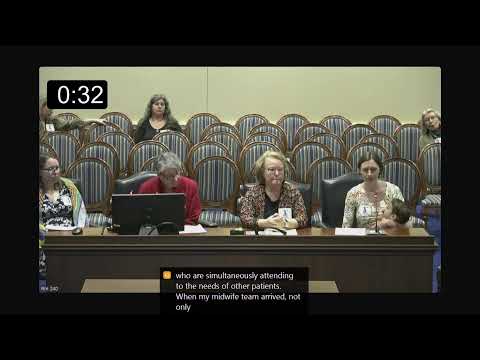
Committee considers doula, hospital transfer and midwife licensing changes amid concerns about consent and integration
Summary
The Health and Government Operations Committee considered bills to require obstetric facilities to publish birthing policies and to revise licensed direct-entry midwife rules, with supporters arguing transparency and clearer transfer plans would improve outcomes and opponents asking for technical fixes.
Delegates and witnesses told the Health and Government Operations Committee that clearer hospital policies on doulas, informed consent, and transfer procedures could reduce conflict and improve outcomes for birthing families. The committee heard House Bill 12-51 (the Doula and Birth Policy Transparency Act) and House Bill 8-38 (revisions and sunset extension for licensed direct-entry midwives).
Nut graf: Supporters — midwives, doulas, patient-advocacy groups and some hospital representatives — framed the bills as transparency and integration measures that would require hospitals to post obstetric policies, adopt transfer-of-care procedures for out-of-hospital births, and ensure doulas may attend births alongside family support. Opponents raised questions about scope, exceptions for emergencies, and practical implementation for hospitals and freestanding birth centers.
What HB 12-51 would require Sponsor Delegate Dana Toles (Tolles) said the bill would require obstetric facilities to adopt and publish policies that address doula access, bonding and newborn-centered care, informed consent requirements for significant interventions (cesarean, induction), and clear procedures for transfers from home-birth providers. The sponsor and witnesses said the policy goal is informed choice and reduced surprise interventions.
What HB 8-38 would do House Bill 8-38 would extend the sunset on licensed direct-entry midwife registration and make multiple practice and reporting changes intended to reflect a decade of regulatory experience. Supporters said the bill removes duplicative notice requirements (multiple automatic calls to pediatricians and mandatory midwife accompaniment on every transfer) and clarifies consult vs. mandatory-transfer triggers (for example moderate anemia or some congenital anomalies could be handled with consultation instead of automatic transfer). The bill retains disciplinary oversight under the Board of Nursing.
Supporters’ arguments Patients, doulas and midwives cited examples where unclear hospital rules or inconsistent reception of home-to-hospital transfers produced delays or conflict. Doulas and midwifery advocates said doulas improve outcomes, reduce interventions and provide culturally sensitive continuity. Supporters urged a favorable report with technical work on language to avoid unintentionally excluding doulas without formal certification.
Hospitals and medical groups The Maryland Hospital Association, the American College of Obstetricians and Gynecologists (Maryland section) and others told the committee they support the goals of transparency and smoother transfer procedures but asked for amendments to avoid unduly prescriptive operational rules and to address emergencies and data/reporting technicalities. Hospitals said they already maintain policies but the bill should require readable, actionable disclosures rather than overly prescriptive operational steps.
Points of contention and clarifications Stakeholders disagreed about whether the bill should apply to freestanding birth centers (none currently operate in Maryland) and whether certain data-reporting burdens on midwives are necessary. The Board of Nursing and hospital stakeholders worked with sponsors on amendments addressing reporting, informed-consent exceptions for emergencies, and clarifying which policies must be posted.
Ending: The committee kept the hearing open for amendments and stakeholder meetings; sponsors said they would continue negotiating technical fixes to align transparency goals, patient protections and operational feasibility.