Get Full Government Meeting Transcripts, Videos, & Alerts Forever!
Get email alerts on the County Budget topic
No spam. Unsubscribe anytime.
Mendocino County adopts midyear budget adjustments, taps $4.2 million ARPA one‑time funds
Summary
The Board of Supervisors unanimously accepted a midyear update to the FY 2024–25 budget that uses $4.2 million in one‑time American Rescue Plan Act (ARPA) funds, directs transfers to capital and landfill closure accounts and asks periodic reserve‑policy updates.
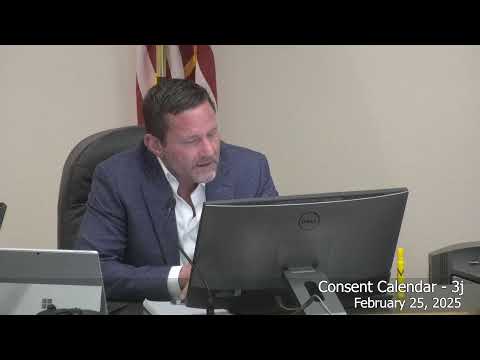
The Mendocino County Board of Supervisors on Feb. 25 unanimously adopted midyear budget adjustments for fiscal year 2024–25, approving the use of $4.2 million in one‑time American Rescue Plan Act funds to help balance the current year’s budget and directing several transfers to capital and landfill accounts.
County officials told the board the midyear review reduced the net county cost from the adopted level and that updated revenue projections showed $2.7 million more than initially expected, lowering the one‑time draw to $4.2 million. "We are recommending prioritizing utilizing remaining American Rescue Plan Act one‑time funding in the amount of $4,200,000 for the fiscal year 24‑25 budget," Deputy CEO Tony Raikes told the board during the presentation.
The midyear package approved by the board included: acceptance of the midyear report; administrative budget adjustments and cleanup; approval of requested fixed assets; a $1 million operating transfer from non‑departmental to landfill closure; a $757,941 transfer to the capital improvement fund; and a $96,169.11 transfer to Mendocino County fire agencies per prior allocations. The board also approved a new finance‑system access and permissions policy (Policy 60) and directed updates to reserve policies (Policies 32 and 33) for calendar 2025.
Why it matters: County leaders emphasized declining cannabis tax revenues and lower sales‑tax projections as drivers of fiscal uncertainty and noted federal funding risks. CEO Antle told supervisors the county receives roughly $55 million annually in federal funds across departments and that uncertainty at the federal level could affect social‑service programs and public safety funding. "We continue to find this county in another year of fiscal uncertainty," Antle said in opening remarks.
The midyear presentation highlighted several items supervisors said they will scrutinize further, including deferred maintenance and capital improvements. Facilities provided a prioritized list of projects; the administration center roof phase was cited as an example with an estimated remaining cost of $2.9 million. Board members pressed for a systematic plan for facility maintenance funding. "We know we need to start somewhere with the funding," Raikes said, describing the recommendation to begin funding capital improvement deferred maintenance.
Board action and next steps: The board voted to accept the midyear report and adopt the recommendations; the motion carried unanimously. Supervisors were told budget workshops for FY 2025–26 will begin March 11 and continue through May, with final hearings in June. The board also directed staff to return revised reserve‑policy language and to prioritize the capital maintenance funding identified in the attached list.
Budget context and fiscal picture: Presenters said salary and benefit costs (the "1,000 series") remain the largest expenditure category and that public protection is the single largest functional area of spending. The county reported being on track to use $4.2 million of the $7 million in one‑time funds previously included in the adopted budget; presenters said updated projections would be refined through the remainder of the fiscal year.
The board also was told it currently projects a general reserve of about $14.7 million by the end of the fiscal year, shy of the policy 32 target of $15.3 million based on the prior‑year expenditure calculation.
Ending: Supervisors asked staff to continue to refine revenue and expenditure projections, to pursue funding options for deferred maintenance and to present more detailed capital and facilities plans at upcoming budget workshops.