Get Full Government Meeting Transcripts, Videos, & Alerts Forever!
Get email alerts on the Emergency Medical Services topic
No spam. Unsubscribe anytime.
Board approves revised ambulance RFP with tighter equity and staffing rules, removes EMCC from recommendations
Summary
Ventura County supervisors unanimously approved solicitation of a revised RFP for exclusive emergency ground ambulance services after directing staff to consolidate service oversight into a single EOA, elevate staffing and local-hire criteria, require public notice for permanent contract adjustments and remove a separate EMCC recommendation.
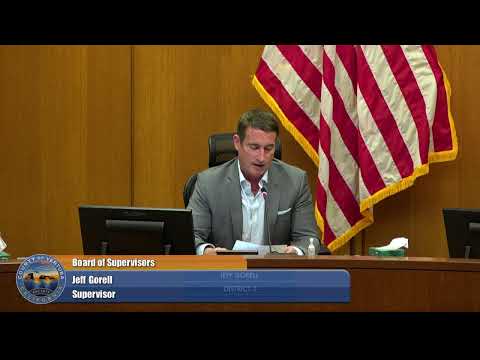
The Ventura County Board of Supervisors unanimously approved revisions to the county’s draft request for proposals for exclusive emergency ground ambulance transport and related medical services on Feb. 25, after months of staff work and sustained public comment.
County staff and consultants presented a revised draft RFP and several policy options during a lengthy public hearing. Supervisors discussed evaluation committee make-up, response-time compliance zones, inspection loads for water infrastructure in an unrelated item and the potential impact of changing the county’s contract model on ambulance rates and equity across communities.
After wide-ranging discussion, the board settled on a set of changes and asked staff to incorporate them into the RFP prior to publication. Key board directions included:
- Single EOA: Move from a multi-subzone compliance model to a single exclusive operating area (EOA) for the county while retaining reporting and performance checks by population density (urban/suburban/rural) so equity is preserved without fixed sub‑zone operational restrictions.
- Scoring and local hire: Adjust the RFP scoring so that support and staffing, including incumbent workforce retention and a clear plan for recruiting and retaining a local workforce, receive increased weight. Staff summarized the changes as moving 5 percentage points from "proven performance/references" into "support and staffing" (resulting in a higher weighting for staffing and local hire) and adding an equity criterion within the requirements/methodology category. The proposed composition of the evaluation committee was 7 members (a mix of county and external evaluators) to be vetted for conflicts of interest by procurement.
- Workforce protections: Remove prescriptive maximum 24-hour unit-hour utilization limits from the draft and replace them with a requirement that any successful contractor maintain and enforce an operational policy to ensure on-duty staff are rested and response-ready; the EMS agency will review and approve such policies.
- Performance and remedies: Preserve an ambulance system performance framework (response-time targets, liquidated damages, and a quarterly "report card") and direct staff to add stronger contractual remedies and a clearer public-notice process for any permanent adjustments to a contractor’s obligations.
- EMCC recommendation removed: The board voted to delete a proposed recommendation to formally establish an Emergency Medical Care Committee (EMCC) and instead asked staff to consider stakeholder oversight options later, after the contract process advances.
Consultants and public commenters emphasized trade-offs: smaller compliance zones can improve equity but generally require more ambulances (and therefore higher costs), while broader compliance areas can reduce unit hours but risk pockets of underperformance. Supervisors repeatedly said they wanted a procurement that balanced cost, performance and local jobs.
Why it matters: The RFP will guide procurement for an exclusive county ambulance provider — a contract that determines emergency response resourcing, staffing and patient charges for years. The board’s changes seek to safeguard equity among neighborhoods while ensuring local hiring and workforce retention during a major contract transition.
Action and next steps: The board moved and seconded the RFP authorization with the changes described above and gave staff authority to work with the state EMS authority and procurement to finalize the solicitation. Staff will return with results of the state review and, later, the evaluation committee’s recommendation if significant changes occur.
Speakers quoted in this article appear in the Feb. 25, 2025, official transcript of the Ventura County Board of Supervisors meeting.