Get Full Government Meeting Transcripts, Videos, & Alerts Forever!
Get email alerts on the Retirement topic
No spam. Unsubscribe anytime.
Panel advances bill to raise superior court judges' retirement age to 65
Summary
A Georgia House committee voted unanimously to advance House Bill 406, a committee substitute that raises the retirement age for superior court judges from 60 to 65 for judges who begin service after July 1, and adds an administrative code section to govern benefit calculations.
A Georgia House committee voted unanimously to give a "do pass" recommendation to House Bill 406 (LC560335S), which raises the retirement age for superior court judges from 60 to 65 for judges whose service begins after July 1 of this year.
The bill, presented by Representative Leverett, would add a new code section (40-3-12.1) and adjust cross-references in the retirement statutes so benefits for judges who begin service after the July 1 cutoff are calculated under the new age standard. The sponsor said the substitute was drafted to address administrative and legal questions raised after an earlier version of the measure.
Representative Leverett told the committee the substitute is intended to move the retirement age for superior court judges to 65 while avoiding potential legal or contractual problems that can arise in retirement legislation. "This will, seem like deja vu all over again to those of you who were here last week, but this is House Bill 4 0 6. We have a committee substitute or proposed committee substitute, LC 56 0 3 3 5 s," Representative Leverett said. He explained the substitute cites whole sections of the code and adds a new section so the change applies cleanly to judges who begin service after the specified date.
Members asked staff and the Employee Retirement System (ERS) about implementation. Mr. Potvin, executive director of the Employee Retirement System, said the ERS reviewed earlier drafts and "the first draft that we saw of of revisions after last week's meeting was a little bit scary, but, I think we've ironed out a lot of that. So we're comfortable with the way it is now." He also said the Judicial Retirement System's most recent valuation was 105.1 percent and that the change would, if anything, slightly improve that funded percentage.
Committee members noted the bill is part of a package of judicial-related measures moving through multiple committees and indicated judges had been consulted. One member said she had spoken with a superior court judge who "said, yes. That's absolutely what we wanna do." Another member asked whether newer judges had concerns; the sponsor and staff indicated current judges had agreed to the change even if they were not enthusiastic.
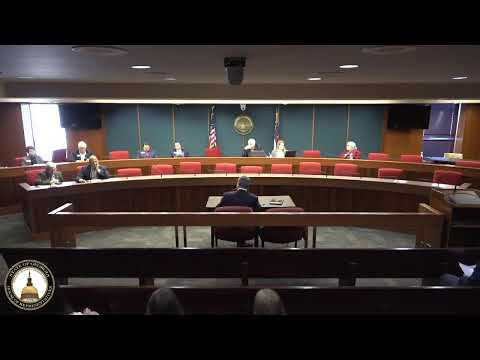
During the hearing, committee leadership noted the chamber's committee rule requires a quorum of eight members but that seven were present; the committee proceeded to hear and vote on the bill. At the conclusion of questions, Representative Thomas moved that the bill "do pass." Representative Horner seconded the motion. The committee chair called for the ayes and the motion passed unanimously among members present.
Votes at a glance: Representative Thomas moved the motion to report HB 406 "do pass"; Representative Horner seconded. The motion passed unanimously by voice vote of members present.
The committee recorded no roll-call votes; the bill was reported favorably and the committee adjourned shortly afterward.