Get Full Government Meeting Transcripts, Videos, & Alerts Forever!
Get email alerts on the Law Enforcement Policy topic
No spam. Unsubscribe anytime.
Bill would standardize law-enforcement oath language and limit felony prosecutions under 'violation of oath' statute, law‑enforcement groups support it
Summary
HB 384 proposes a uniform statutory oath for peace officers and restricts felony prosecutions under the 'violation of oath' statute to oaths explicitly prescribed by state law; proponents argued it prevents misdemeanor conduct from being elevated to felonies, while some committee members opposed narrowing enforcement tools.
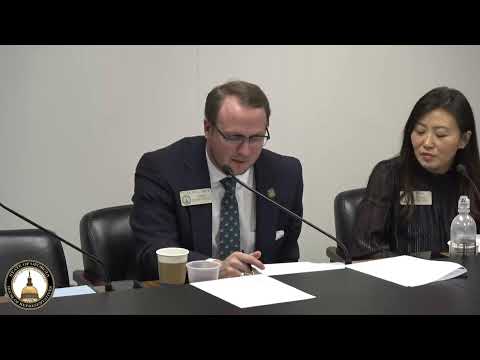
Representative Seebaugh introduced House Bill 384 with testimony from Lance Russo (general counsel) and Mike Callahan, president of the Georgia Fraternal Order of Police. Sponsors described HB 384 as standardizing the oath taken by peace officers, clarifying which oaths carry criminal weight, and limiting felony prosecutions under the "violation of oath" statute to those oaths prescribed by state law. The sponsors said the measure would prevent misdemeanor violations or agency-policy breaches from being prosecuted as felonies under an oath statute. (Representative Seebaugh; Lance Russo; Mike Callahan.)
Committee members questioned how the bill would affect internal discipline and Post certification. Representative Judge Gunner asked whether misdemeanor conduct could still be addressed administratively; witnesses said the Peace Officer Standards and Training (POST) authority can still suspend or revoke certification and agencies can terminate employees. Opponents on the panel said the bill could reduce accountability for officers who commit off-duty crimes or misconduct that undermines public trust. Representative Gunner and others said they opposed narrowing the statute to exclude some prosecutions where the oath breach was closely tied to corrupt behavior. (Questioning and debate.)
Supporters said the bill addresses case law (State v. Tullus, cited during testimony) where courts found charging certain minor offenses as violations of oath could be unfair. The committee left HB 384 as a hearing-only matter for further study. No committee vote was recorded in this session.