Get Full Government Meeting Transcripts, Videos, & Alerts Forever!
Get email alerts on the Wrongful Conviction Compensation topic
No spam. Unsubscribe anytime.
Committee advances bill to create administrative process and fixed awards for wrongful convictions
Summary
Committee passed HB 533 to establish a state administrative process for compensation of people exonerated for crimes they did not commit, setting $75,000 per year incarcerated plus $25,000 for death-penalty cases and routing payments through the judiciary budget.
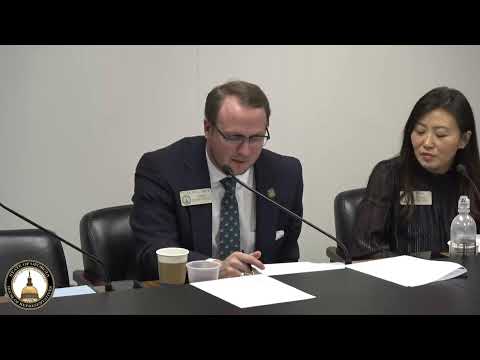
Representatives Dempsey and Holcomb presented House Bill 533, the "Wrongful Conviction Compensation Act," to create a uniform statutory process to compensate people exonerated of crimes. The bill would create a filing process, require a claimant to prove innocence (preponderance of evidence), place hearings before the Office of State Administrative Hearings, and send approved compensation requests to the chief justice for budgeting and appropriation. (Representative Dempsey; Representative Holcomb.)
Key procedural features explained by Rep. Holcomb include a three-year filing window measured from an effective date or from exoneration, tolling provisions for newly discovered evidence, and exclusions for accomplices or those who pleaded to protect a true perpetrator. Holcomb described administrative timelines: an administrative judge assigned within 15 days and a hearing targeted within 180 days, with findings forwarded to the chief justice for budget consideration. (Representative Holcomb.)
The bill sets a per-year compensation rate of $75,000 for each year incarcerated, prorated as needed, and an additional $25,000 for people convicted with the death penalty; payments may be made to heirs if the claimant dies. The bill also credits any civil settlements against the administrative award to prevent double recovery. The courts asked for a budgetary clarifying clause; an amendment was discussed to add the phrase "subject to funds appropriated by the General Assembly" to avoid using court operating funds. (Representative Holcomb; committee discussion.)
Committee members asked about attorney-fee rules, and Holcomb said fee limitations were part of the draft (contingent-fee concerns were raised). Representative Panish thanked sponsors for bipartisan work. The committee voted to pass HB 533, adopted an amendment from Representative Holcomb, and passed the bill out of committee. (Motion and amendment recorded; formal vote counts not specified in the transcript.)