Get Full Government Meeting Transcripts, Videos, & Alerts Forever!
Get email alerts on the Legal Pending Litigation topic
No spam. Unsubscribe anytime.
Cochise County supervisors enter closed session on LaChance jail-district lawsuit
Summary
The Cochise County Board of Supervisors voted unanimously Feb. 25 to enter an executive session to receive legal advice and consider possible legal action in the pending jail‑district lawsuit LaChance v. Cochise County, CV24‑0150‑PR.
The Cochise County Board of Supervisors voted unanimously Feb. 25 to enter an executive session to receive legal advice and consider possible legal action in the pending jail‑district lawsuit LaChance v. Cochise County, case number CV24‑0150‑PR.
The special meeting opened in the Supervisor's Executive Conference Room at 1415 Melody Lane in Bisbee and proceeded directly to a proposed executive session under the Arizona Revised Statutes. The board cited Arizona Revised Statutes §38‑431.02 and §38‑431.03 (A)(3) and (A)(4) as the authority for a closed meeting to receive legal advice and to consider the public body's position and instruct its attorney.
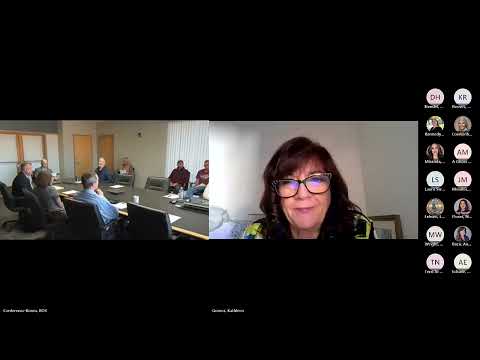
According to the public record of the meeting, the board conducted a roll call before the closed session. Supervisor Crosby (District 1) was initially absent but later marked present; Supervisor Gomez (District 2) attended via Microsoft Teams; Supervisor Antinori (District 3) attended in person. Present for the county were Lasota, the retained attorney for the case; Kathleen Gilman, acting county administrator; Casey, deputy acting county administrator; Stevens, county recorder; and Lowenhaim, county clerk and clerk of the board.
Kathleen Gilman said, "I make a motion that we go into executive session." A second to the motion was recorded and the board chair called for a vote. The board responded with five "aye" votes and the chair announced, "The motion carries. We are now in executive session." The transcript shows the board later reconvened in regular session and immediately adjourned the special meeting. No public details of the closed deliberations or any directions given in executive session were disclosed at the meeting.
The agenda notice for the meeting stated that minutes and discussions that occur in executive session are confidential under the cited Arizona statutes. The board indicated the next scheduled meeting would be the library district meeting immediately following the special meeting.
Because Arizona law makes executive‑session deliberations confidential, the county did not disclose the content of legal advice or any instruction given to counsel during the closed session.
Votes at a glance: Motion to enter executive session — outcome: approved (5–0).