Get Full Government Meeting Transcripts, Videos, & Alerts Forever!
Get email alerts on the Municipal Finance topic
No spam. Unsubscribe anytime.
Delaware council rejects repeal of working‑outside tax credit after heated debate
Summary
Council considered ordinance 24‑100 to repeal a longstanding income‑tax credit for residents who work outside the city. After extended debate about capital needs and fairness, the full council voted down the measure 4‑3.
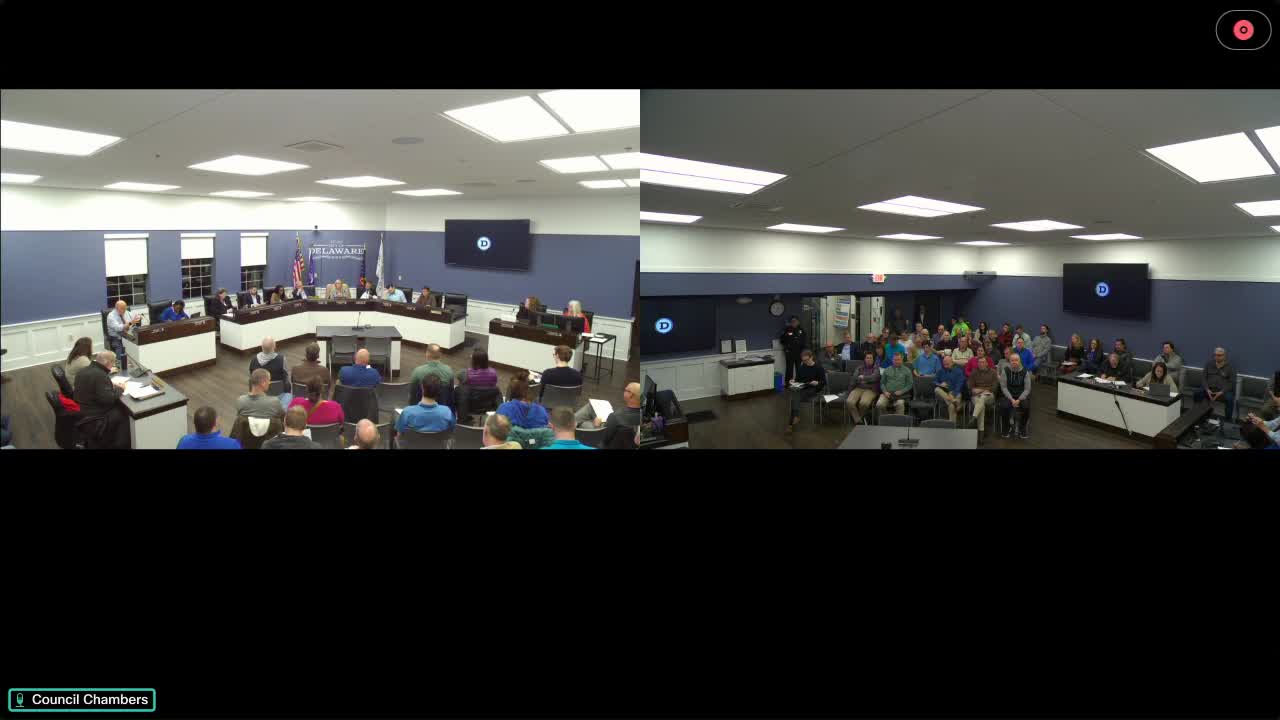
The Delaware City Council on Monday voted against repealing a long‑standing municipal income‑tax credit for residents who work outside the city, rejecting ordinance 24‑100 as amended by a 4‑3 roll call vote.
Why it matters: The credit had been offered as a relief for residents who live in Delaware but commute and pay income tax to other municipalities. Council members debating repeal framed the question as a balance between short‑term fiscal relief and long‑term capital obligations. Supporters of repeal said the city needs revenue to pay for deferred capital projects; opponents said repealing the credit would disproportionately harm families who already pay higher taxes elsewhere.
Public comment and council debate At the start of the meeting resident Scott MacVicar urged council not to eliminate the tax credit, saying the change would discourage people from moving to the city. Council members then engaged in more than an hour of debate later in the meeting about the city’s capital backlog, fairness of taxation and political feasibility of levies.
Councilman Haynes argued for fiscal action, saying the city faces “serious financial issues” and that it would be irresponsible to do nothing. In the meeting record, Haynes said: “There is no neutral. There is forward or there is backwards,” urging steps to address capital needs rather than defer them.
Opponents including Councilwoman Fraser and others said the repeal would alienate voters and households who already told council they oppose tax increases. Fraser said she could not support the repeal because it would erode community trust and make it harder to pass future measures: “I can’t in good conscience vote for it, knowing that… it’s going to hit the bottom line of 60% of the people in my ward.”
Votes and outcome Council first approved a technical amendment to set an effective date of Jan. 1, 2026 for any repeal action. When council then voted on the ordinance as amended, the motion failed on the final roll call with the following recorded votes: Yes — Councilman Haynes; Vice Mayor Schaffer; Mayor Bridal. No — Councilwoman Griffith; Councilman Hoffman; Councilman Reiter; Councilwoman Fraser. Because the ordinance did not receive a majority, the city retains the existing tax credit. The record shows the amendment to the ordinance’s effective date passed, but the substantive repeal vote did not.
What happens next Council members repeatedly said they intend to continue seeking other solutions to pay for capital projects. Several members urged renewed efforts to reframe and repurpose future levy proposals and to pursue additional cost reductions and alternative revenue options. The city’s finance director presented updated impact and infrastructure numbers earlier in the meeting and staff will continue to provide financial analysis as council considers next steps.
The transcript and public comment record will be part of the official file for ordinance 24‑100; no legislative change to the tax‑credit program was adopted on Feb. 24, 2025.