Get Full Government Meeting Transcripts, Videos, & Alerts Forever!
Get email alerts on the Public Comment topic
No spam. Unsubscribe anytime.
Public commenters criticize campaign sign littering and question council's handling of First Amendment rights
Summary
Two members of the public used the Feb. 25, 2025 public comment period to raise concerns about campaign sign littering and to ask whether the council can limit topics during public comment. Council Chair Ivy pushed back on one speaker's remarks about specific candidates and reminded both speakers of time and decorum rules.
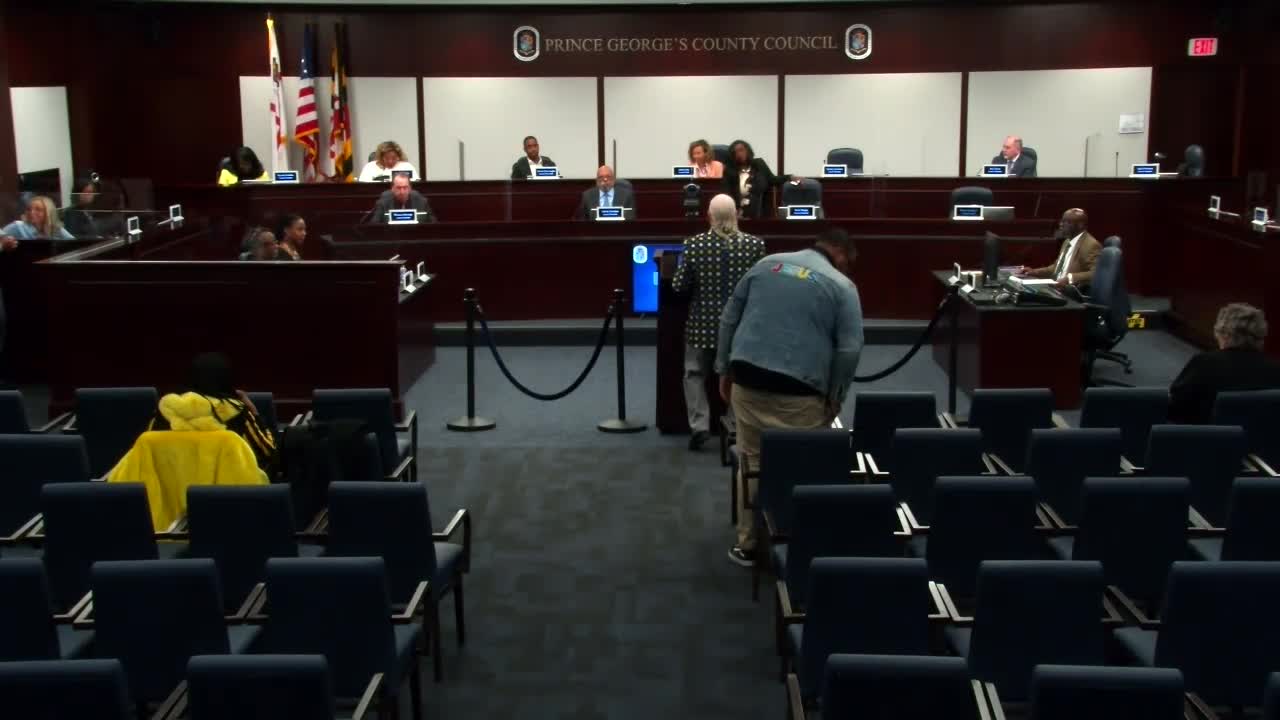
Two members of the public addressed the Prince George's County Council Feb. 25, 2025 during the scheduled public comment period to raise separate concerns about campaign signage and the scope of free-speech protections in public meetings.
Jacques Chevalier told the council he was speaking on behalf of community members upset about campaign signs ‘‘littering’’ county streets after a candidate dropped out of the county executive race. "It's not being personal. I'm just simply stating what a lot of the public asked me to help express to you," Chevalier said. Chair Ivy interrupted several times to enforce decorum, telling Chevalier he was being inappropriate and reminding him of time limits; at one point the chair said, "You are being inappropriate and you know it." Chevalier urged the council to consider eliminating the two at‑large council seats and made several personal remarks before his time ended.
Ruth Wright, who identified herself as a community activist, asked whether council members had the authority to restrict what a taxpayer may discuss. She opened by saying, "The First Amendment protects every American's right to free speech, press, assembly, petition, and religion." Chair Ivy told Wright the council would not answer questions during the public comment period and asked that she proceed with her allotted time; the chair said the period was not the opportunity to seek immediate answers from the council.
Both public commenters were permitted to finish their time within the council's public comment rules; the meeting then moved on to the consent agenda and other business.