Get Full Government Meeting Transcripts, Videos, & Alerts Forever!
Get email alerts on the Gaza Humanitarian topic
No spam. Unsubscribe anytime.
UN says ceasefire window has allowed major aid deliveries to Gaza but gaps persist
Summary
United Nations officials reported large flows of food and vaccinations into Gaza since the ceasefire but warned of continuing access limits, recent child deaths from cold, and the need to assess schools used as shelters before reopening.
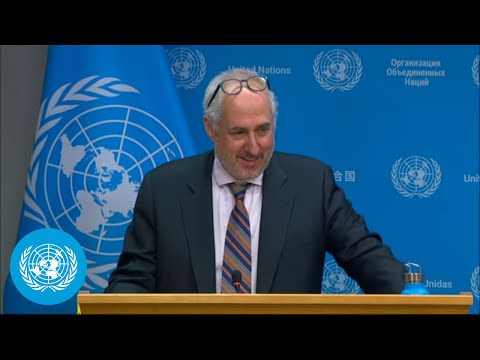
The United Nations reported on the humanitarian situation in Gaza on Wednesday, saying a recent ceasefire has allowed substantially more aid to enter the territory while significant needs and access barriers remain.
UN officials said the World Food Programme has moved more than 30,000 metric tons of food into Gaza since the ceasefire started and that more than 60 kitchens supported by WFP across the Gaza Strip, including in northern Gaza and Rafah, have distributed nearly 10 million meals. The UN Relief and Works Agency for Palestine Refugees (UNRWA) reported its teams have reached nearly 1.3 million people with flour and about 2 million people with food parcels since the ceasefire began.
Why it matters: The new window of access has allowed humanitarian actors to scale up deliveries and public-health activities after months in which fighting and restrictions limited operations. Still, UN officials warned that access constraints and supply shortfalls continue to put civilians at risk.
The Office for the Coordination of Humanitarian Affairs (OCHA), citing the Gaza Ministry of Health, said the latest polio vaccination campaign administered about 548,000 children — roughly 93 percent of the target population — and was extended by one day to try to reach full coverage. UN officials also said that, according to Gaza’s Ministry of Health, six children recently died from exposure to severe cold, bringing the total deaths from cold to 15 among children in recent weeks.
The UN’s special coordinator for the Middle East peace process, Sigrid Kaag, told Security Council members that hostage releases and protection of civilians must remain priorities and that "there can be no question of forced displacement," according to the UN summary of her remarks.
UN spokespeople noted continuing logistical and access challenges. Responding to a question about tents, caravans and other shelter materials, the UN spokesperson said, "My understanding from our humanitarian colleagues is that there's been a lot of challenges in getting tents and caravans and tarpaulins in. We continue to push. Some are going in, but we need more." When asked whether those limitations reflected restrictions imposed by Israeli authorities, the spokesperson said that was their understanding.
On schools, UN humanitarian partners have identified additional schools in Rafah, Khan Younis and Deir al-Balah that were used as shelters for displaced people. The spokesperson said those facilities will be assessed and repaired as needed to prepare for reopening as schools. The UN also said it does not have forensic capacity to determine, upon entering a facility, which party used it during the conflict.
The increased access has also allowed health and nutrition partners to resume services. The UN highlighted that many deliveries and operations remain reliant on the ceasefire holding and on continued deconfliction between humanitarian agencies and security actors.
Ending note: UN officials urged all parties to uphold obligations under international humanitarian law and stressed that humanitarian delivery and reconstruction efforts will require sustained access and donor support.