Get Full Government Meeting Transcripts, Videos, & Alerts Forever!
Get email alerts on the Middle East Peace Reconstruction topic
No spam. Unsubscribe anytime.
UN envoy says two‑state solution is "withering" as Gaza reconstruction faces political hurdles
Summary
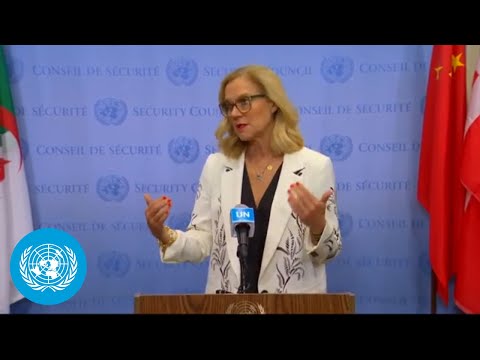
Sigrid Cog, the United Nations special coordinator for the Middle East peace process, told a council briefing that the geographic viability of a two‑state solution is eroding and that Gaza reconstruction faces political and governance obstacles even if funding can be found.
Sigrid Cog, the United Nations special coordinator for the Middle East peace process, told the council on Monday that the geographic viability of a two‑state solution is "withering away before our very eyes" and that political and governance barriers are the primary obstacles to rebuilding Gaza.
Cog said that statements alone will not be enough to preserve a two‑state outcome and urged active diplomatic engagement. "Statements are one thing, but we need action," she said, adding that "words themselves won't solve it. It needs active political engagement and diplomacy." The envoy described expansion of settlements, repeated threats of annexation and the impact of conflict in the Gaza Strip as factors reducing the prospect of a two‑state solution.
Council members asked about financing and timelines for reconstruction. In response, Cog said official development assistance — including humanitarian funding — "has always been precious," and said reconstruction will require a mix of public and private financing. She identified the European Union, Gulf states and partners such as the World Bank as possible contributors, and noted private‑sector and risk‑financing mechanisms could be constructed to help meet needs. "At the moment, in a strange way, that is the least of my worries. It's the politics and governance to get to do the job to recover and reconstruct Gaza," she said.
When asked whether she would travel to Washington and meet U.S. officials, Cog said she was not going on that trip but expected to meet American officials on future visits and in the region. On proposals reported in public debate about forced relocation of Palestinians from Gaza, Cog said the United Nations and Palestinians view forced displacement as "both not acceptable. It's a violation of international law." She added that Palestinians and countries in the region do not want forced displacement and that, with political will and agreements, Gaza "can be recovered and reconstructed."
On reconstruction timing, Cog declined to give a firm estimate and pointed to the UN's rapid updated disaster and needs assessment, which she said phases early work into an initial three years focused on rubble removal and temporary housing followed by additional stages. Asked about external estimates that reconstruction could take 15 years or more, she said she would not "compete with the real estate experts" and emphasized that, while reconstruction takes time, beginning work creates employment and prospects for residents.
The briefing included questions from individuals identified in the transcript only by first name. "Maggie" opened questioning about remarks that this might be "our last chance" for a two‑state solution. Another questioner identified as "Edie" asked about Washington visits and a reported plan to relocate Palestinians. The transcript also records a courteously framed exchange with a person addressed as "Madam Cotton," but no formal council action or vote followed the briefing.
The session focused on the envoy's assessment of political obstacles to both a two‑state outcome and a coordinated reconstruction effort in Gaza, and on the roles that international donors, regional states and private financing might play if a political framework is agreed.